
Whenever I visit the Himalayas, the subconscious self of mine wakes up and starts thinking about the job options over there. I guess, everyone who loves Himalayas has the same kind of mindset. If you go through the blogs and posts of these kind of people, you can feel the strong desire of settling themselves up there and living their dream. So whenever I see or hear someone is packing for Himalayas, I feel something beneath my feet. I own this instinct biologically as my father is an adventurous kind of man who has visited Himalayas several times in his youth. They were a group of Artists who used to trek together. All their families used to stay at home. Hence, it was only stories and photographs for me from my father and the uncles. The strong desire to be in the Himalayas was stuck inside me from then.
It was a Sunday afternoon of April 2018, I called my childhood buddies Raktim and Sayan in Bangalore to plan a short trip in June. They said that they could not make anything in June as they were set for a trek to Borasu Pass in Himalayas for ten days. And the tickling started beneath my feet. Within a week I created a situation in which even I would not have had any plans for June…HaHa…I was all set for Borasu with them. I always amaze myself with my own actions when this tickling happens beneath my feet. My family was supportive enough to let me go leaving them at home.
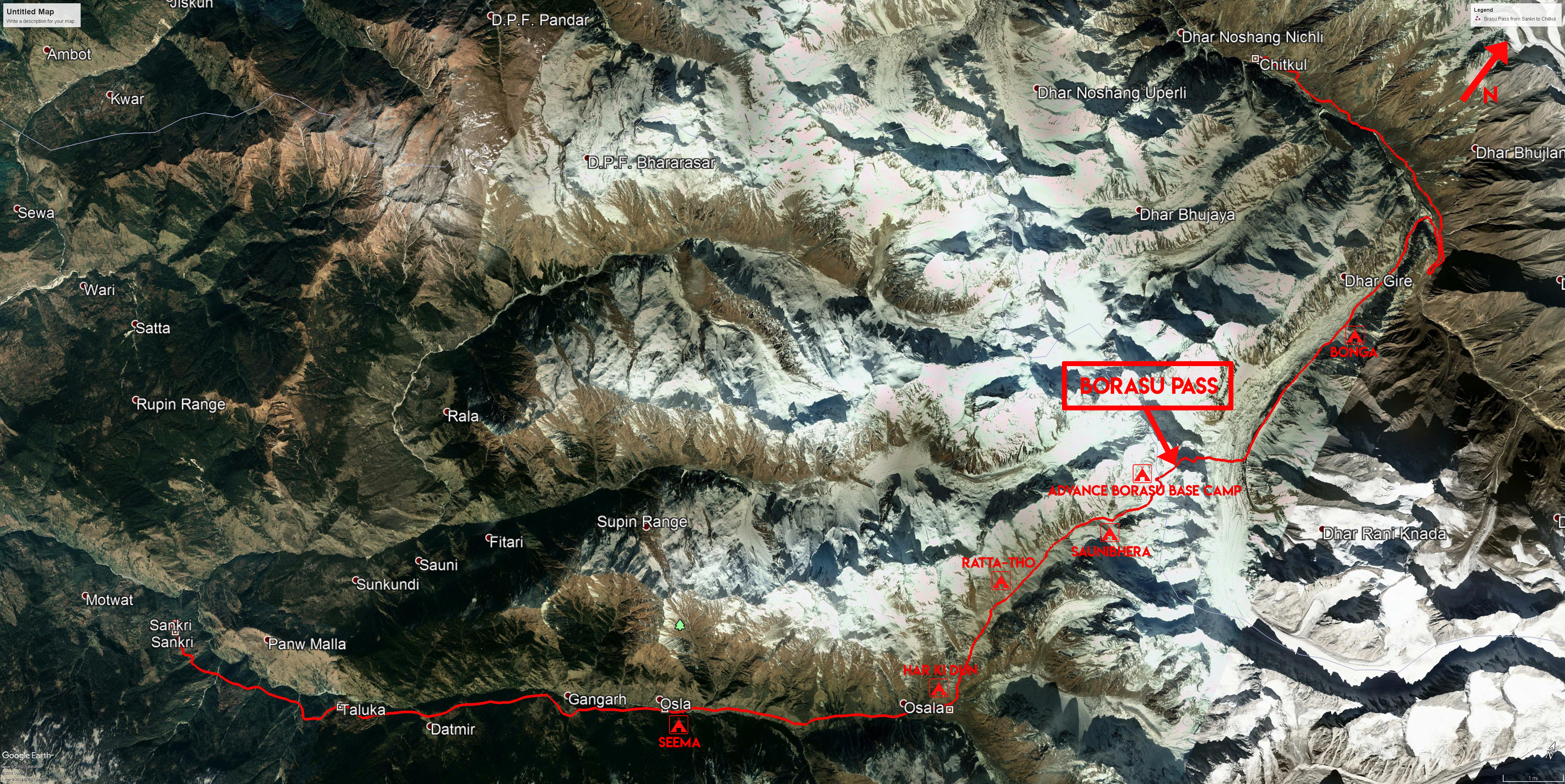
Borasu is roughly 5500 meters pass, lying down in the border of Uttarakhand and Himachal Pradesh. The tallest one I trekked before this was Chandrashila, 4000 meters. So, as an inexperienced trekker I counted it only numerically. But trek routes can’t be counted only with the altitude, I experienced this while passing Borasu.
From April to June, I spent my mornings training myself to get ready for a high-altitude Himalayan pass. I bought the necessary equipments with the help of my friends. But for the last few days I could not train enough because it rained every morning in Hyderabad. It was a bit nervous time for me in the end thinking if I could make it with my physical fitness.
As Borasu is a state crossing trek and the pass is very near to Tibet (China) International Border, one should find permission from ITBP(Indo-Tibetan Border Police) to cross the pass. The permission is usually collected by the Organizer or the Guide one day prior to the start of the trek. In 2018, monsoon reached in India 10-15 days before the usual time . We got to know, due to heavy rainfall some casualty happened in Govind National Park and authorities were not issuing permission for almost a week. We all got little upset and started looking for alternative treks where permission would not be needed. Mandani Valley was in our bucket. But with some “connection” we got the permission to enter Govind National Park, though the ITBP permission was pending.
Finally, the time had come to relax the tickling under my feet…
8th June, 2018
I boarded an evening flight that took me to Delhi. As I was not experienced to board flight with a trekking bag, I needed to rearrange my backpack in the airport for security reasons. All my effort of arranging everything at home just washed away in a minute. I lost my earphones in the process. Thank God it was clear sky and the flight was on time. Again, I rearranged my bag in Delhi airport. From Delhi airport I headed to a metro and reached New Delhi station. It was then only nervousness around me…”how will be the rest of the trek-mates”…”can I do it”… I had never been to a remote place like Borasu…neither have I spent a night in my life inside a camp or a sleeping bag. All these things were roaming around my head.
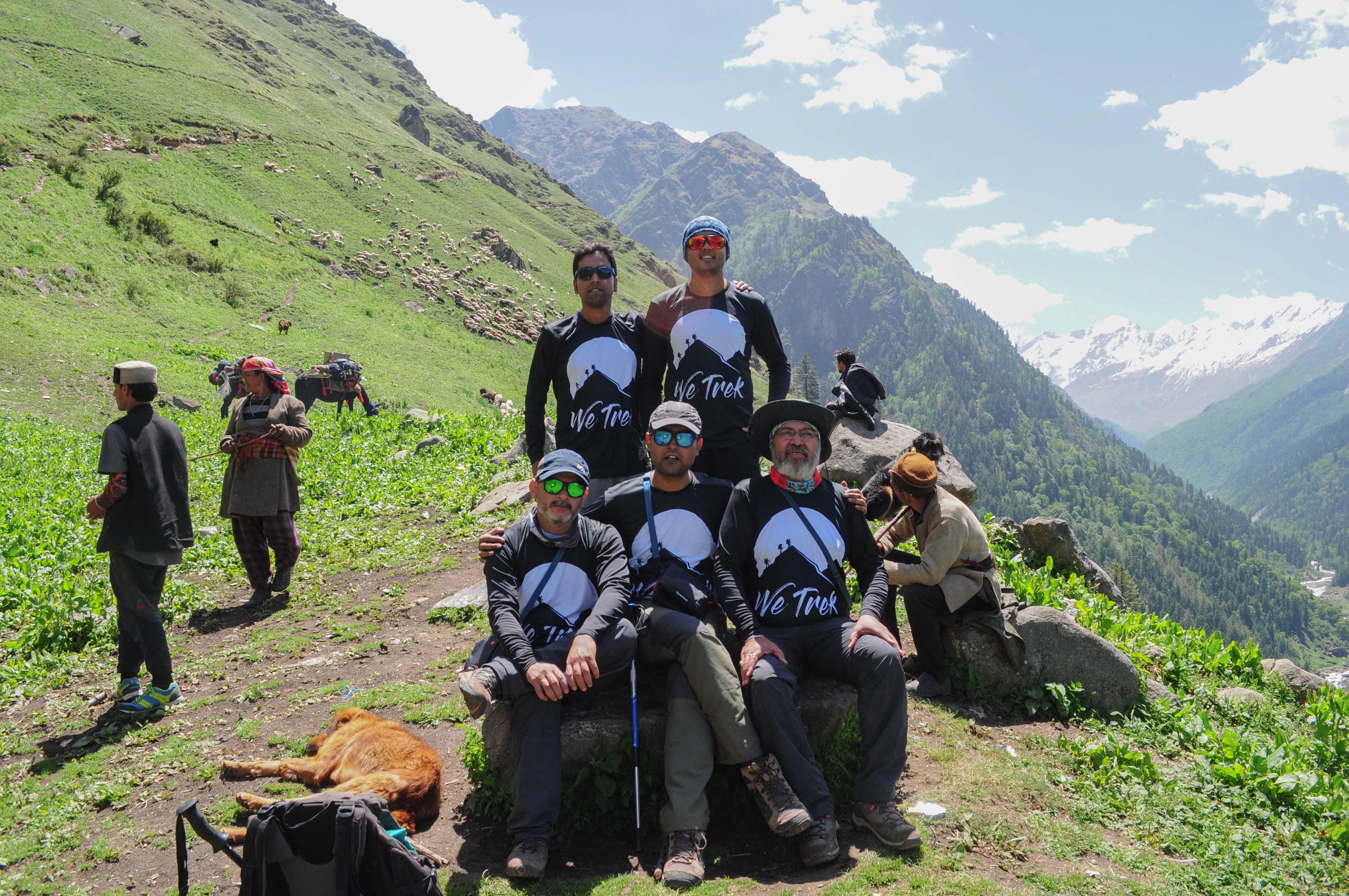
We were ten people in the group, and among them I knew only Raktim and Sayan before. A month before the journey the group assigned me to design a Logo for the group…”WeTrek”. The idea was to print t-shirts for everyone and wear them in the trek. After the design, I cracked some good deal with a printer in Hyderabad. So, I had an extra bag of all the t-shirts with me.
I had my dinner with my favorite Butter Paneer and Roti in a Dhaba outside New Delhi station. I am always a fan of Delhi food. I was alone and was waiting for the group to come. Rahul Bhai called me up inside the station. We met inside the Nandadevi Express which was about to take us to Dehradun. Everyone gathered within 5 minutes inside the coach and it was a celebration suddenly. The thoughts that were worrying me just vanished in the air. Everybody was happy with t-shirts I brought for them and that got me an instant relief.
Seven of us- Navtej, Rahul, Sayan, Dr. Sanjay, Harsha, Raktim and I, were set for Borasu and end our trek in Chitkul, Himachal Pradesh. And the other three Dr.Surender, Sachin and Jitendra were set to come back from Har Ki Dun to Sankri, Uttarakhand.
The train started moving. The happy days were ahead…
9th June, 2018
The very first day started with raining. It was more of a drizzling that kept us inside the platform while waiting for the Tempo Traveler to take us to Sankri. Everyone grabbed their coffee or tea and the trek stories started coming out. The train that took us from Delhi to Dehradun is a very popular one for the trekkers as it reaches Dehradun early morning. Guys like Navtej, Rahul, Sayan, Harsha are experienced trekkers. They had many experiences of reaching Dehradun the same way and head out for different parts of Himalayas.
Birendra, our organizer reached us with a Tempo Traveler in an hour. We tied our bags on the roof of the Tempo. And next stop was…somewhere in the wild.
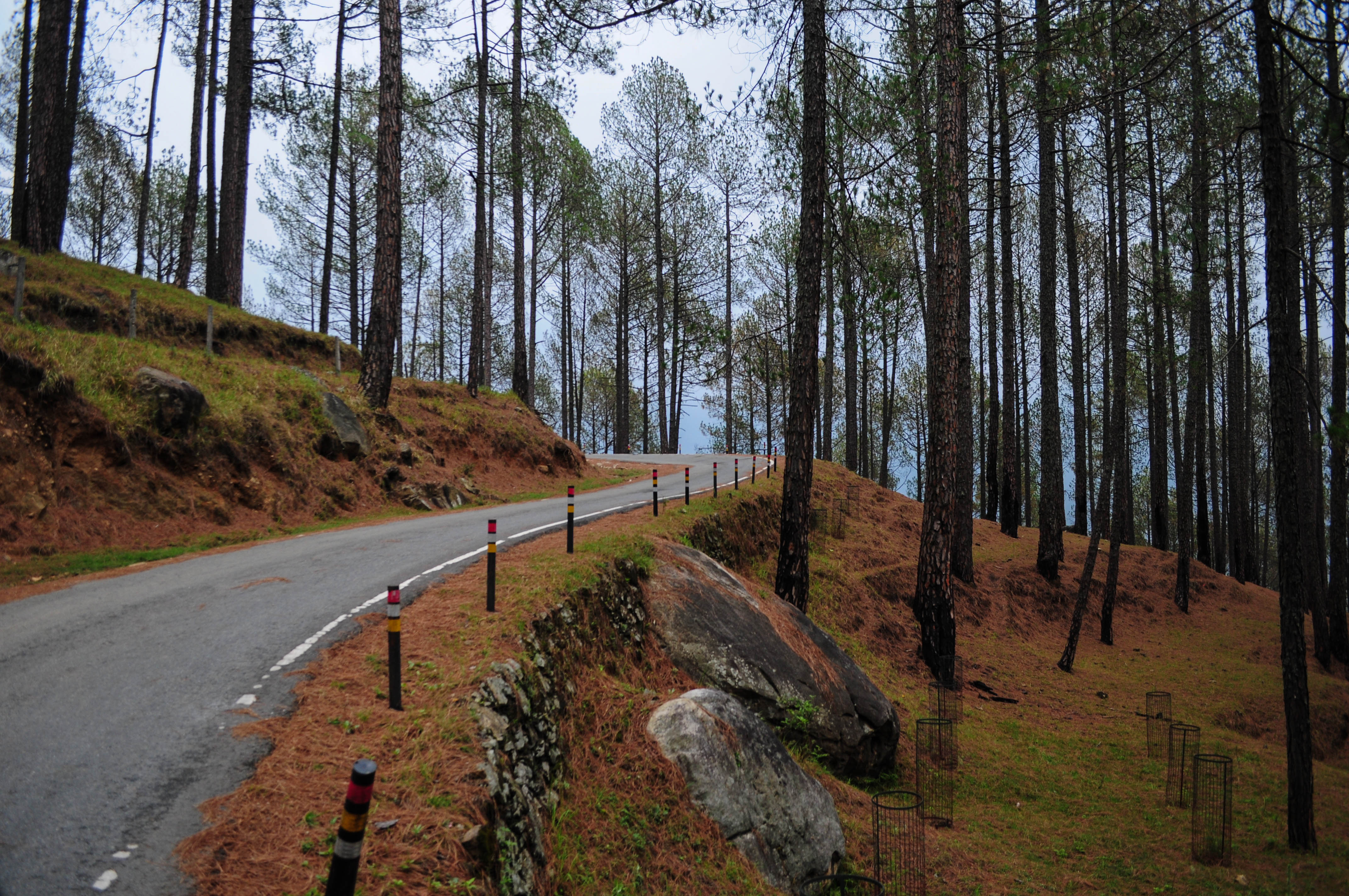
We did our brunch in Mussoorie. The weather was gloomy with occasional raining. We all were hoping to have a good weather during the trek. The daily afternoon rain in Har Ki Dun valley was a well-known factor though. We met several groups of trekkers who were set for Bali pass, Har Ki Dun, and Kedarkantha.
The ITBP permit played a tricky game with us. Cutting it to the conclusion that we didn’t get the ITBP permission. So, again the destination became bit more challenging. I brought out my camera and started focusing off the issue. This off-focus lead me to a have a serious struggle. I got detached from the group and I progressed too little on our route. The rest of the team got a headache because of me as they thought I was lost. However, they found me after a while and gave me some serious threats. Believe me, after that I always held somone’s hand for the rest of the days…HaHa. Kidding!
On the way to Sankri we all loaded our liquors in non-breakable bottles, as after Mori village neither you can find a shop nor a mobile network. We all made calls to our families as the next contact would be after 8 days.
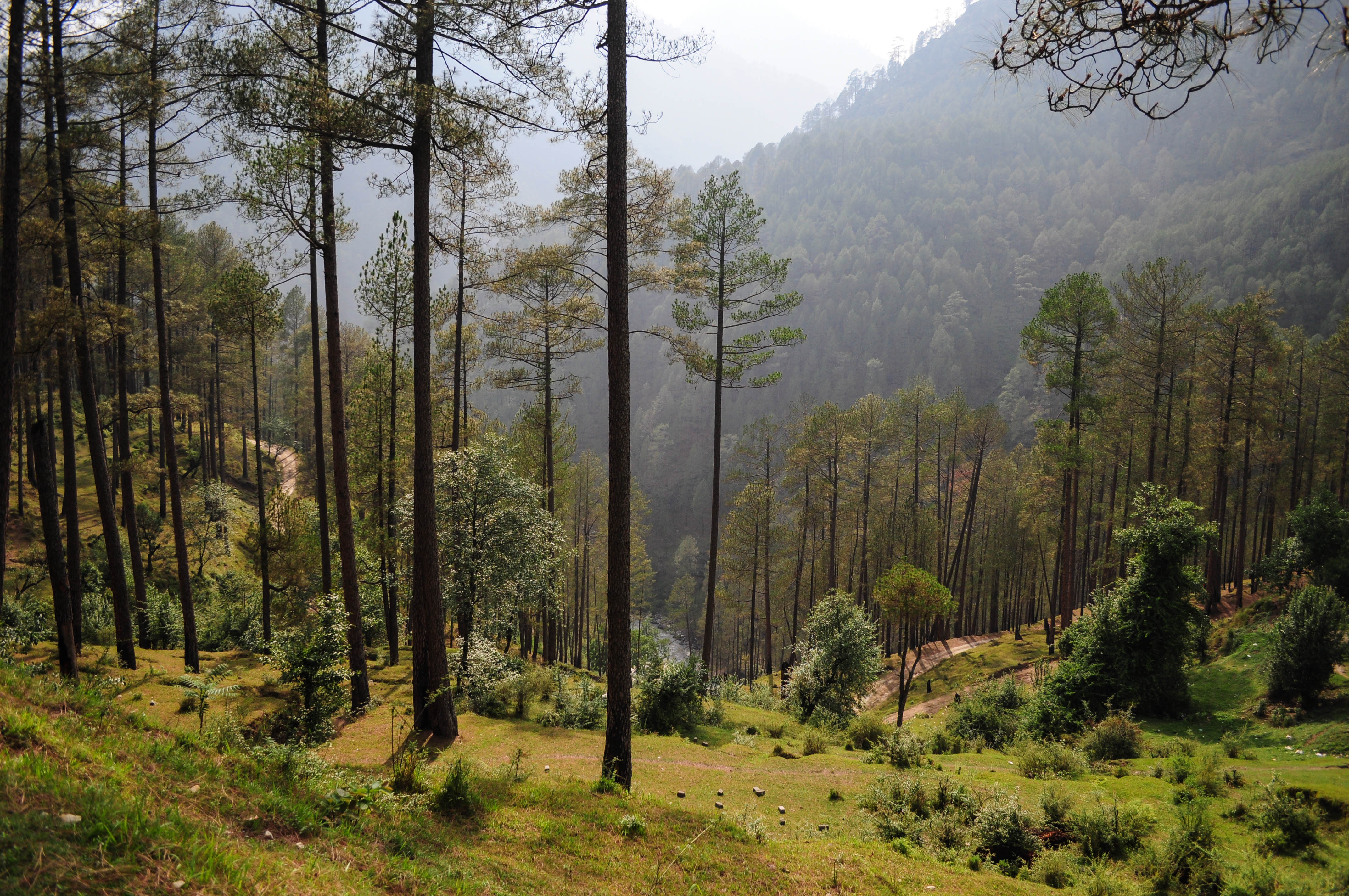
We saw glimpses of rivers like Yamuna, Supin, Tons and saw many brunches. Our Tempo was already surrounded by unknown snowcapped peaks. The magical air of Himalayas (which you can buy in airtight packets now…LOL!!) made all our worries already vanished. We reached Sankri by four in the afternoon and the weather was clear. The organizing group met us in the hotel we stayed. We exchanged our introductions and experiences. Our guide Jaychand encouraged us that we could pass Borasu without permit. We just had to keep in mind some important things when we would reach the ITBP camp in Chitkul. That was enough encouragement and there was enough land to cross before Chitkul. We took small acclimatization walks as Sankri was already 1900 meters.
That night we started a party with minimum alcohol, maximum celebration that lasted till 17th.
10th June, 2018 (Sankri, 1950 mt to Taluka, 2150 mt to Seema, 2600 mt; 8 Km drive, 13 km trek)
Before we started the trek, there was a 12kms drive to Taluka village. So, we started at 7:30 in the morning. It was a sunny day with some patches of clouds. A landslide divided the road into two parts, 4kms before and 8kms after the landslide area. With all our belongings we boarded the Jeep. But because of the off-focusing incident last day I got the roof seat with Dr. Sanjay, Rahul Bhai and some support staffs of our team. It was the most horrible 4km-drive I ever had in my life. The slope was straight down for 500 feet minimum and I was sitting on the side of the slope. I almost had the heart on my mouth that day but the beauty of nature all around saved me. We got off the Jeep with backpacks just before the landslide area, crossed the landslide and settled on a small bridge. There were almost 3-4 groups already who were traveling to Har Ki Dun. We saw all the groups boarding their respective Jeeps and leaving. We kept on standing, clicking photos, Sachin shaving using front camera, Rahul bhai sleeping, Dr. Surender exercising, dancing, eating mangos and lots of other stuffs. But our Jeep didn’t come. More than us, Birendra was feeling disappointed. So, he decided to walk that 8kms and call the Jeep himself. In between it was time for some shower and for me it was a poncho unfolding and folding exercise. Birendra came back with the Jeep at about 11:30. This time Raktim accompanied me on the Jeep top. Dr. Sanjay was making his “not more than 30 sec” video clips in that challenging condition.
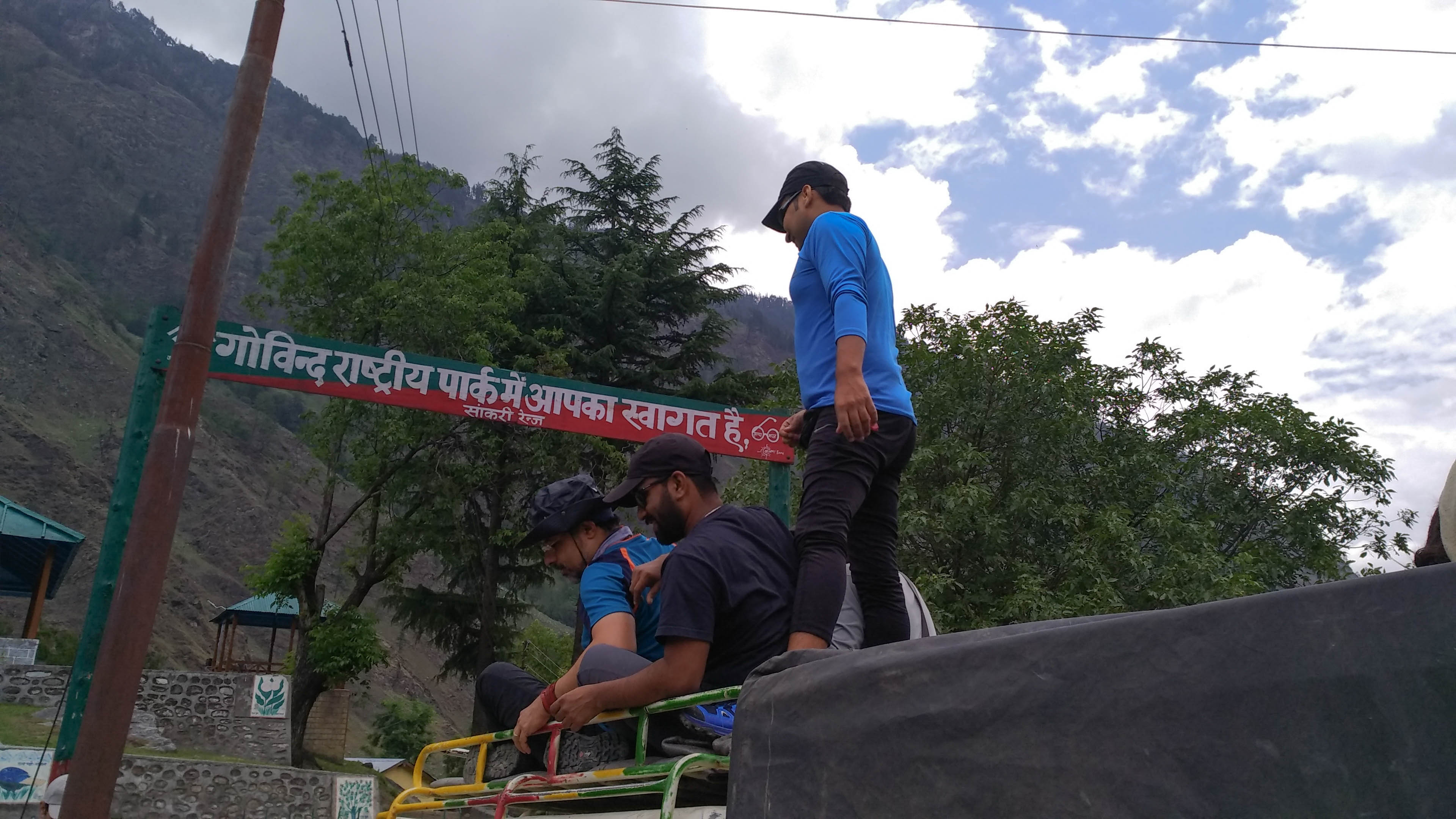
We reached Taluka in about 40 minutes. Taluka is a beautiful small village with maximum of 100 wooden houses. We quickly had our lunch in one and only dhaba over there with dal, rice and omelette. I had an extra omelette as it was the first meal I was having from morning. And that extra omelette costed me a lot of pain in the first day’s trek.
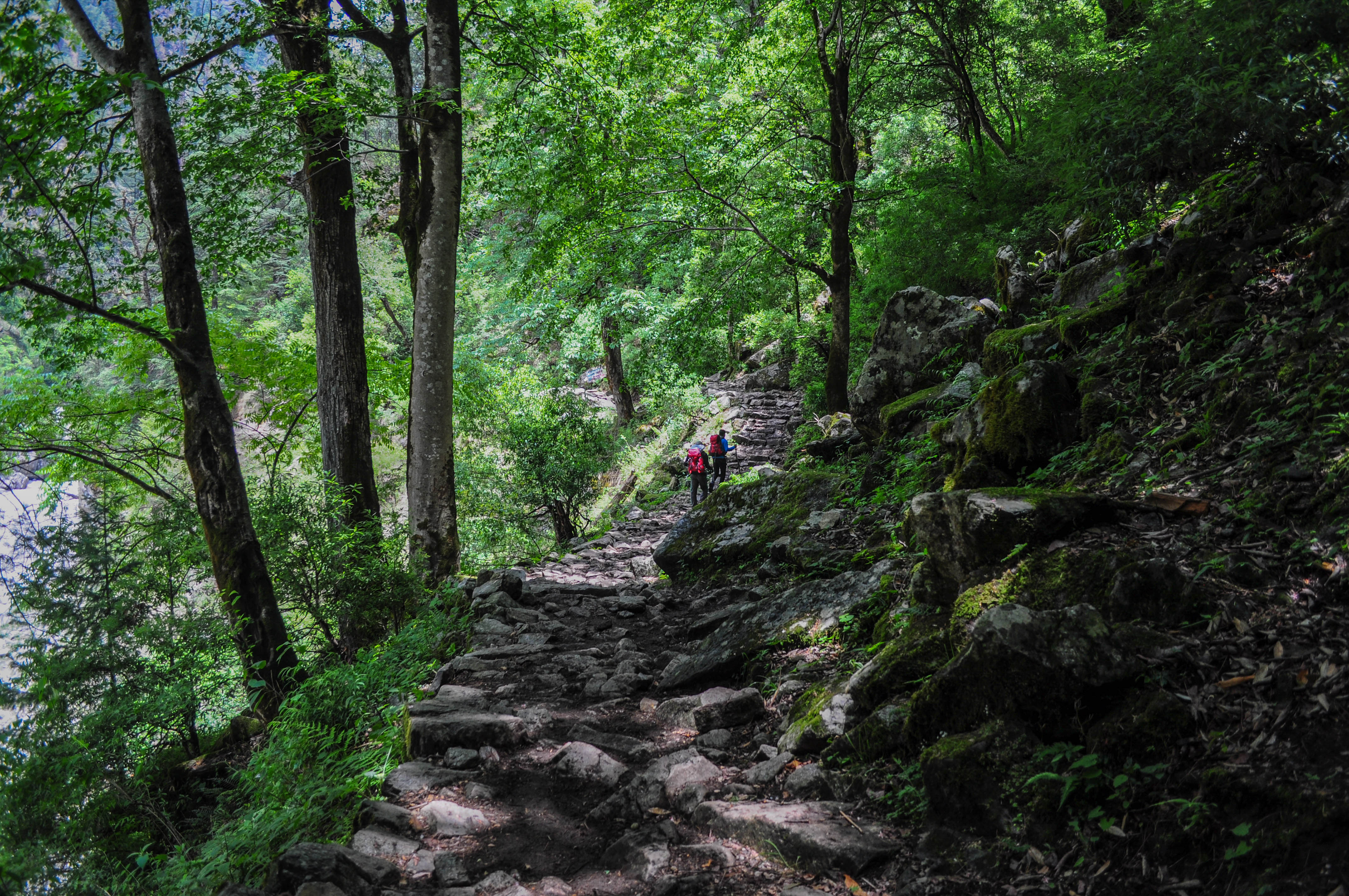
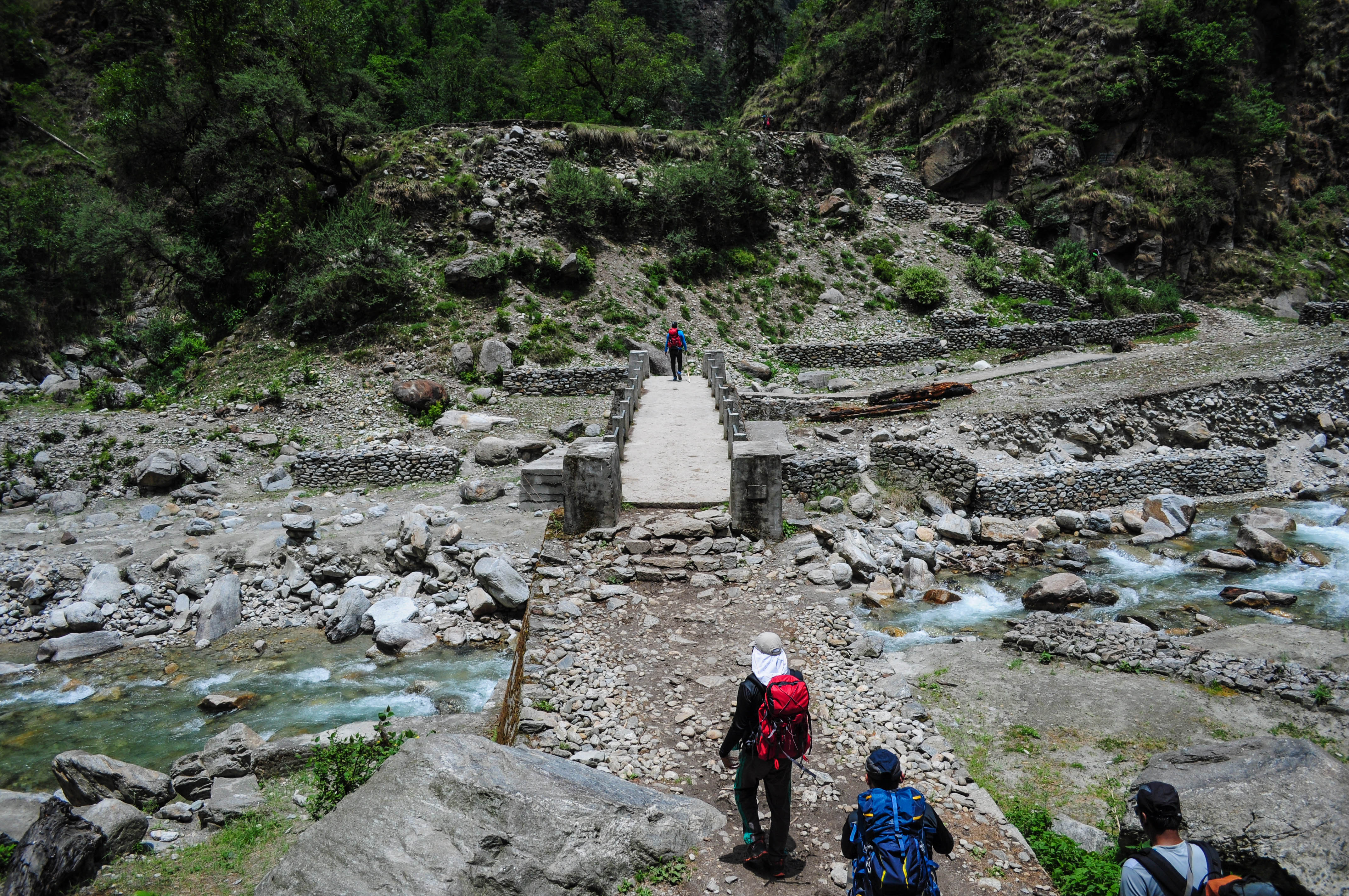
The plan didn’t change due to the late start. We had to cover roughly 14kms and reach Seema village and it was an easy to moderate trail. So, immediately after the lunch we started the day’s trek. The trail we covered that day was well defined and was by the river almost always. There were couple of points when we needed to cross the river through man made concrete bridges. You can also find 2-3 local tea stalls in the route. Upto Har Ki Dun, this trekking route is very very popular and we had witnessed many groups on the way. Har Ki Dun is also a very popular winter trek as well. There was not much gradient in the trail. The river is Har Ki Dun ganga, as they call it locally, that streams down and meet Tons near Sankri. The weather was clear initially but rained in the last 5-6 kms of the trek as in this valley afternoon-rain is pretty common.
Don’t ask me about my experience of the very first day. It was terrible. The extra omelette costed me a tiring and dehydrating trek. I am usually not very comfortable of walking just after a meal and that was exactly what happened that day. First two kilometers were pretty good for me but the situation changed after that. The guilty second omelette brought out the whole meal. I was vomiting in every 5 minutes. I got dehydrated and tired. My actions slowed down Raktim and Rahul bhai too. One support stuff was constantly keeping an eye on me and coming behind. Raktim doubted my preparations but I was confident and pretty sure that this happened only because I started walking immediately after a heavy lunch. Anyway we four reached the campsite almost one hour after the rest of the team had reached. It was almost 5pm. By the way, our Doctors found some good companies on the way to Seema…HaHa!
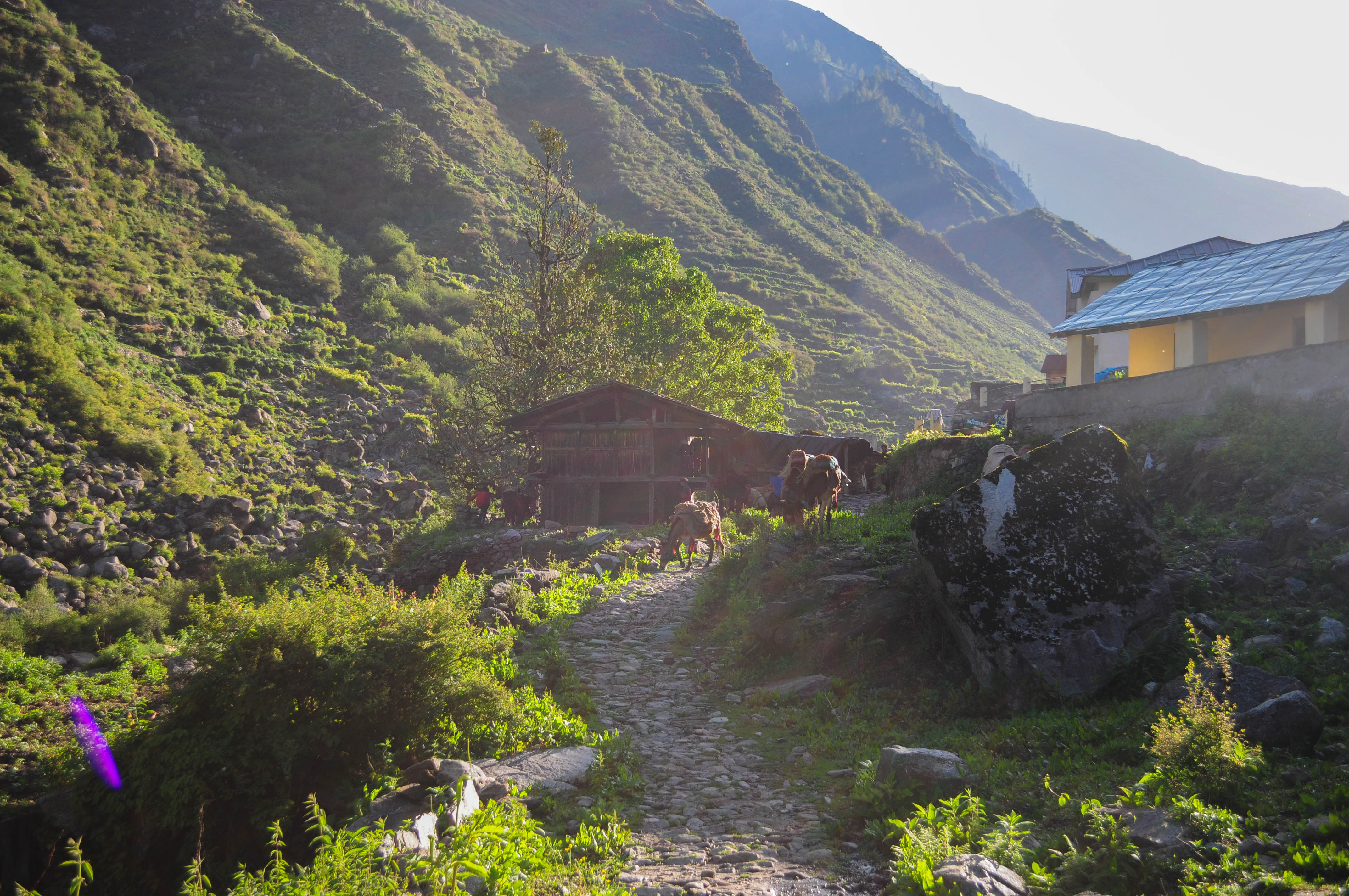
The place where we camped at Seema, was not a usual campsite. It was an open hall with corgate celling, enough to accommodate four tents containing ten heads. The village was beautiful in the bank of Har Ki Dun ganga with maximum of twenty cottages. Seema was the last village till Chitkul in our trekking route.
The nature was mesmerizing in the twilight. On the opposite mountain skin Osla village was visible. Many trekkers choose Osla as their campsite. Duryodhan tample is a highlight of Osla. We continued our practice of minimum alcohol and maximum celebration. Our support staffs served us extremely delicious dinner that night- paneer, dal, roti and salads. The tent-mates got decided that night. I, Raktim and Harsha were sharing one tent,Sayan and Rahul Bhai were sharing one, Dr. Sanjay and Navtej Ji in one and the Har Ki Dun return team was in one. The combination stayed the same till last day.
11th June, 2018 (Seema to Har Ki Dun, 3500 mt; 14 km trek)
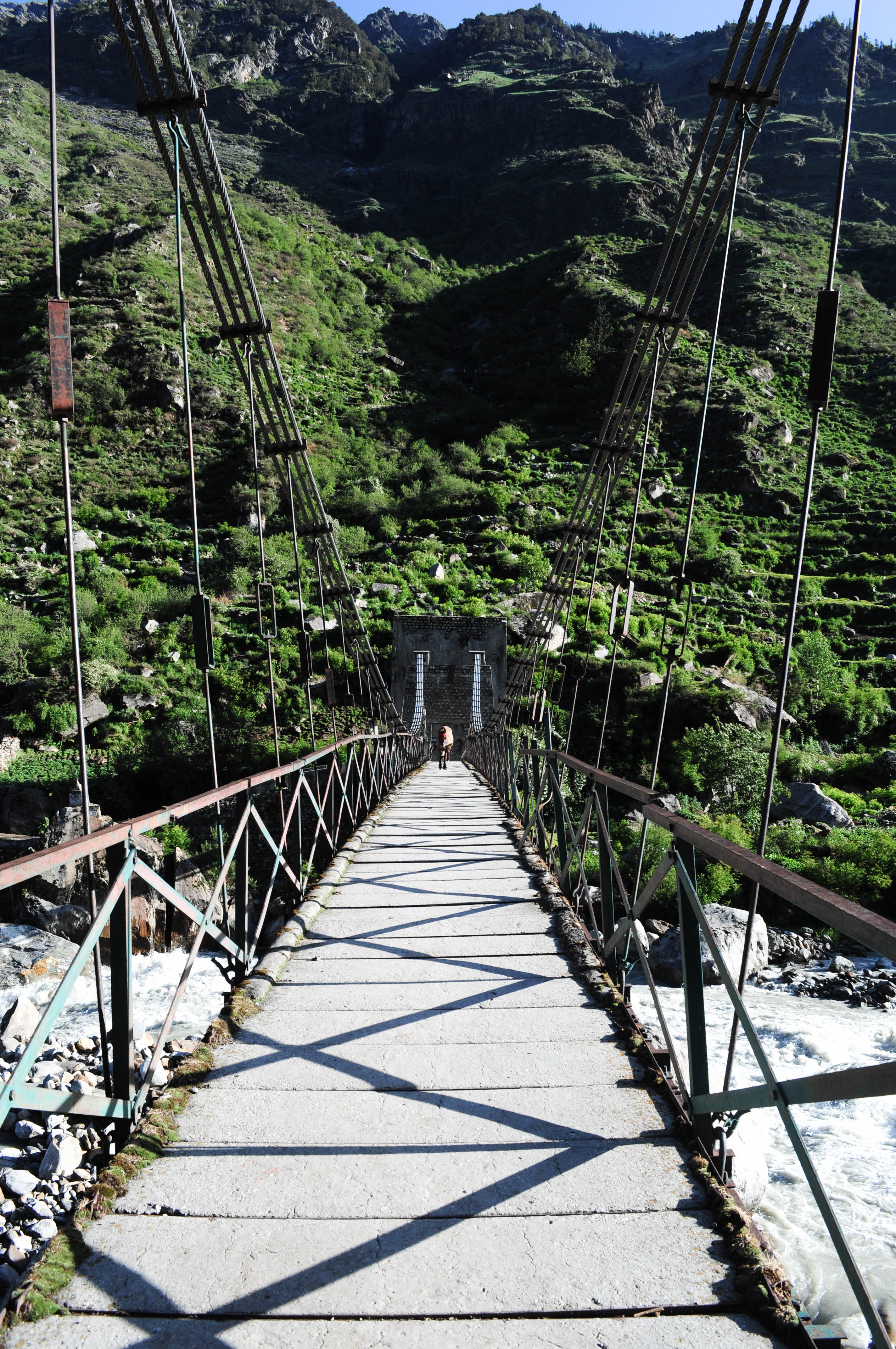
I realize now, that, there is nothing to be afraid about the tents.They are comfortable in every sense. The first positive is that you don’t have to set an alarm. So, rise and shine in the lap of Himalayas. It was reflecting light from everywhere and the air was chilled. I woke up around six and started roaming with my camera. A suspension bridge marks the end of Seema village and connects to Har Ki Dun valley.
Everyone completed their morning rituals in the wild. After a decent breakfast we were all set for the second day’s trek. I was feeling much better that day. The only worry was if the same situation would follow me! But luckily it didn’t happen anymore.
We started around ten in the morning. From Taluka to Har Ki Dun the distance is roughly 27 kilometers and we covered half of that a day ago. So, another 14kms of heavenly trail was waiting for us. After crossing the suspension bridge, we immediately gained some altitude and for the first time we saw a snow-capped peak- Mt. Swargarohini. The gradient of the day’s trek was bit more than the day before. From Seema, 2600 meters; we were approaching toward Har Ki Dun which is roughly 3500 meters. The whole valley was full of beautiful meadows, mid-sized straws, birch and pine trees. This trail also contains some tea stalls. The people hardly get 25-30 customers a day, but the smile on their faces are so real and so pure.
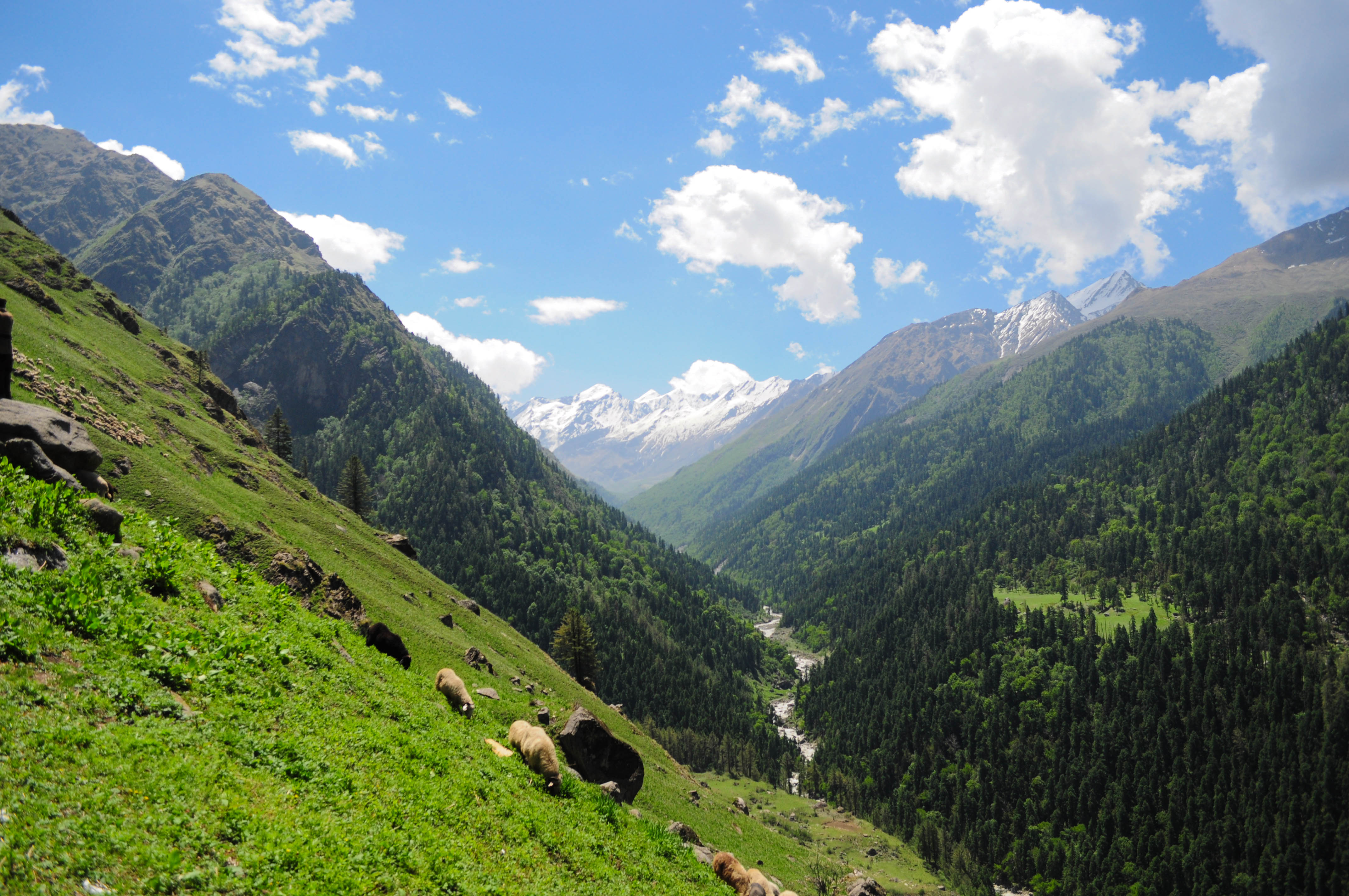
We walked in comfortable speed through the magical nature toward the valley of God. This trail is full of small and medium streams, all flowing down to make the Har Ki Dun Ganga richer. So, there was no worry about drinking water. And once you drink that you can feel what mineral water is all about. You drink heaven, you breath heaven, you see heaven. Everywhere you look, is heaven. We were over 10000ft but there was no lack of greenery in the environment.
12th June, 2018 (Har Ki Dun to Ratta-tho, 3800 mt; 5 km trek)
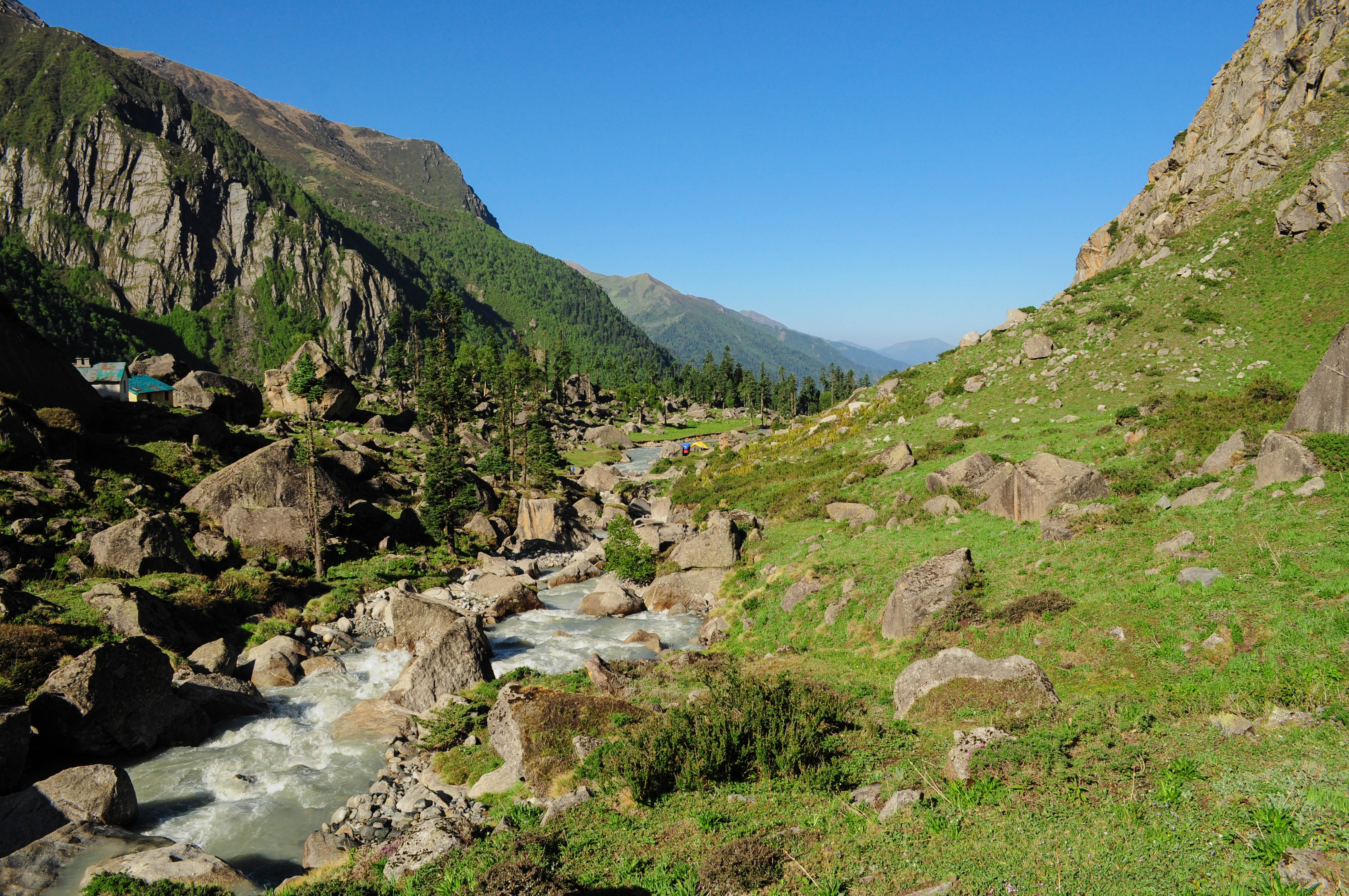
The plan of this day was to walk less and indulge more into nature. The Sun came out from the left side of Mt. Swargarohini. The trees were still visible on the West where we came through. Everyone was out with their cameras. The Har Ki Dun Ganga was flowing in full swing. I climbed a small ridge, just beside our campsite after crossing the river over two wooden logs. There were two small Shiva temples. Over the ridge, another valley was lying with a small stream, coming out from Swagarohini glacier that is called Jaundhar Glacier.
We started around 10 in the morning. The Har Ki Dun group was little confused whether they sould come half the way with us till Morinda Tal or take a different route toward Jaundhar Glacier. Anyway they had to return Seema by evening. After a while they made up their mind to come with us till Morinda Tal. From this place there were no prominent trail, no village, no tea stall ahead. There was only “insignificant us” in the vast nature. Till 15th we didn’t even saw a single new human being. Hence, here onward we were totally dependent on our guide Jaychand Bhai. In Har Ki Dun we met a solo trekker from Argentina who was returning after getting failed to spot the Borasu Pass. It is quite difficult to spot the right one when you surround yourself with similar looking mountains, all looks like the one you are about to climb.
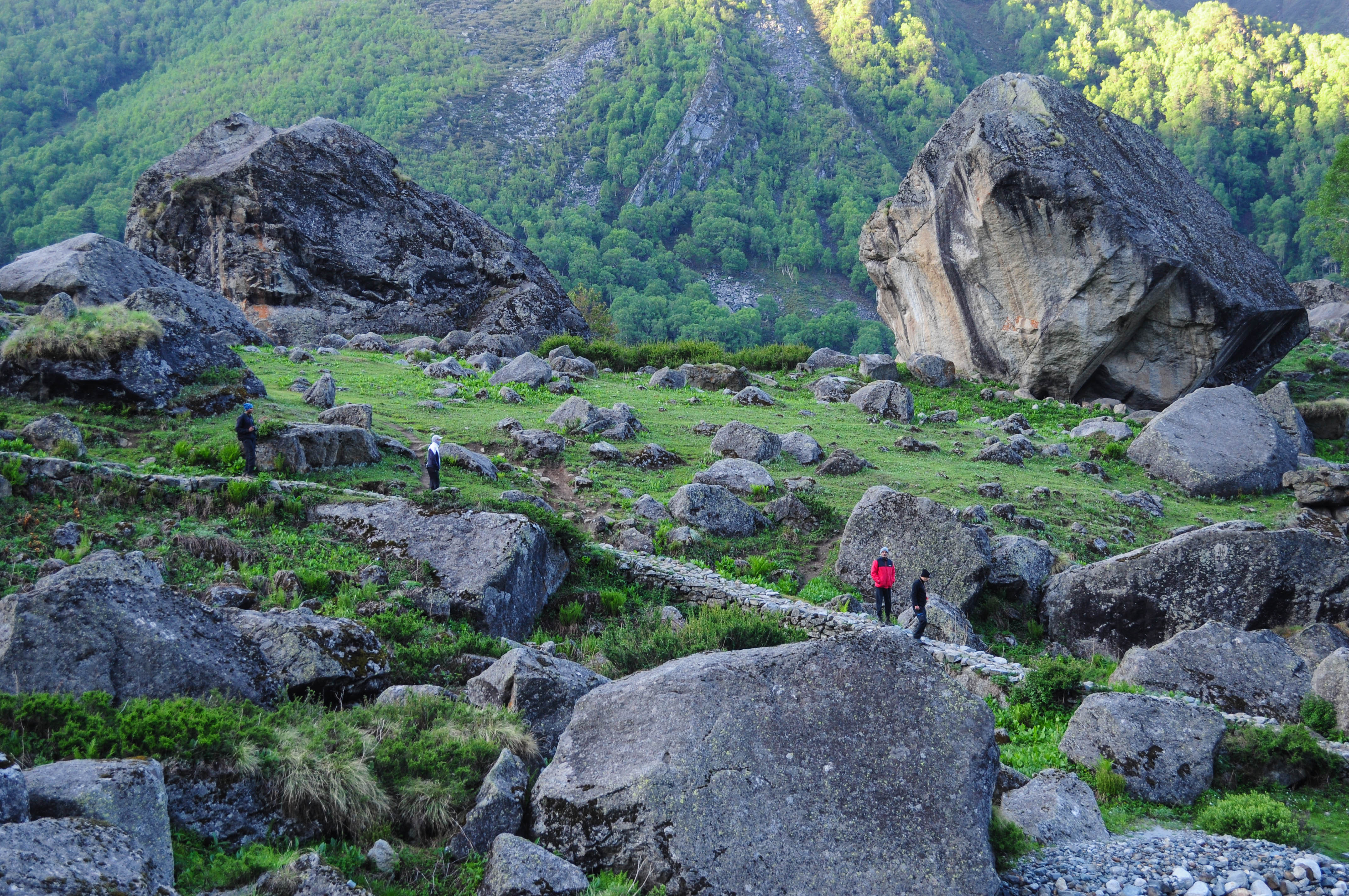
The trek of this day, was a short one, only 4kms. Harsha was a champion runner through the ups and downs even with his 12kgs backpack. He had always reached first in the spot and captured some superb photographs of the whole group with the huge scaled nature. After crossing a small ridge, we brought ourselves in a vast lush green valley. The same river which is called as Har Ki Dun Ganga in the valley we were coming from, was flowing on the right-hand side of us. The mountains surrounding us were almost dry and snow on the caps got larger as we progressed. After a 2kms of trek we reached Morinda Tal. A big rock was blocking the flow of the river. We spend some time in Morinda Tal. Our next campsite was only 2 kilometers away. Three of our mates were about to leave us and take the return route.
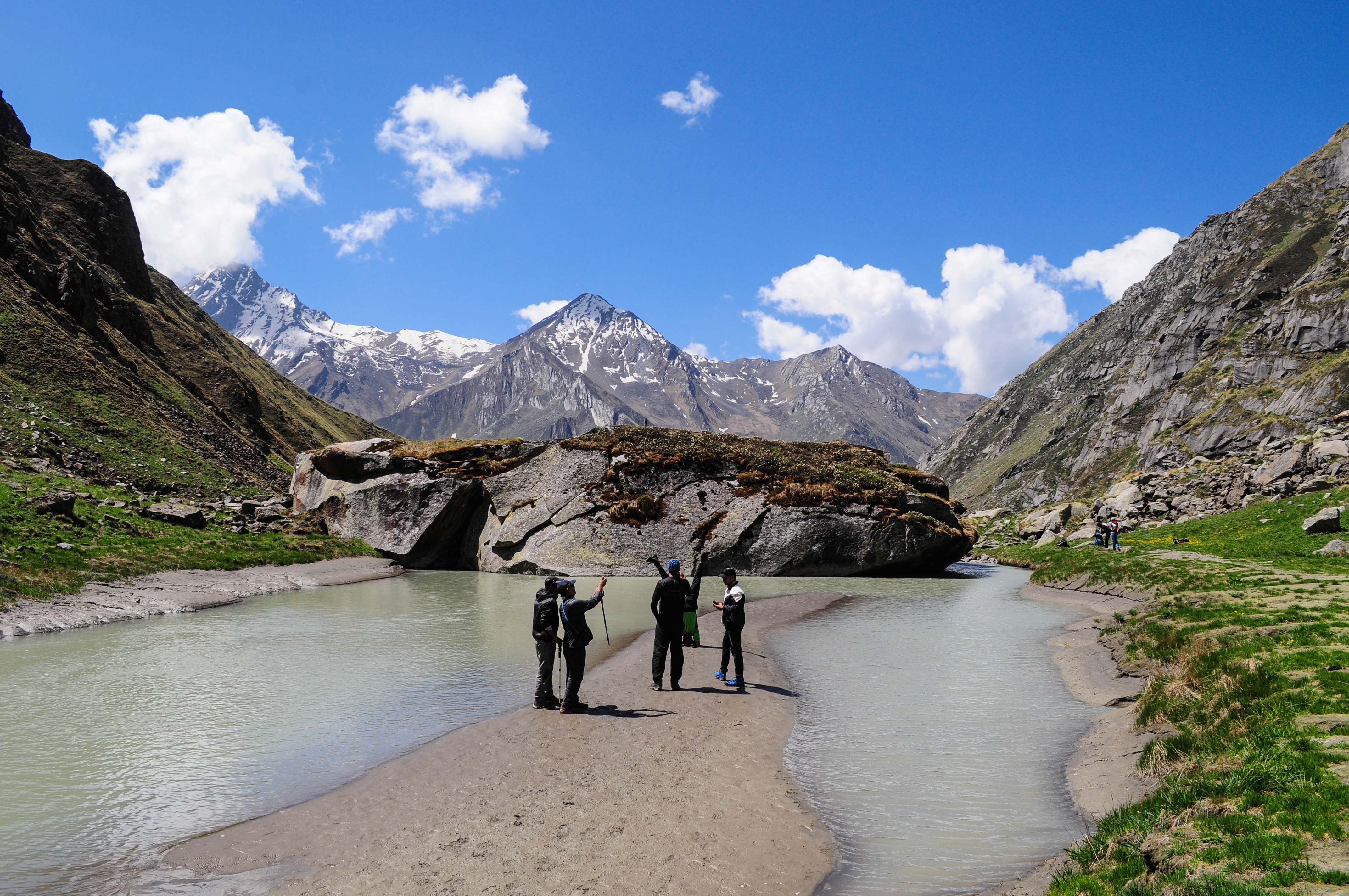
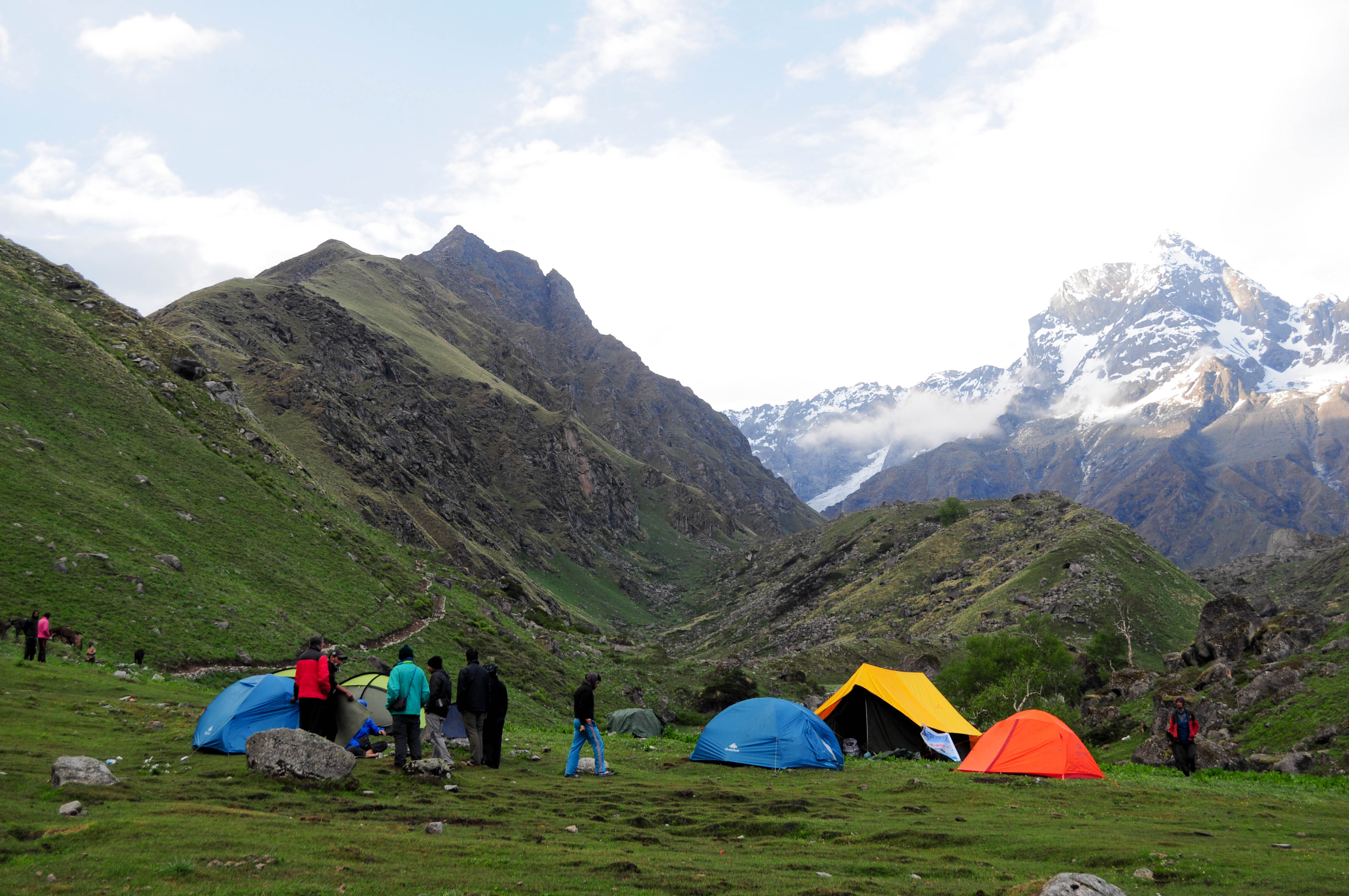
Here onward we progressed as seven people team and two people were less in supporting-staff group who went back to Sankri with our three mates. We gently kept walking by the riverside through the meadows and reached our campsite of “Ratta-tho” by 1 o’clock. It was kind of a lazy day for us. We camped on a land that had much bigger grasses. A big red rock with green moss was lying by the side. This is the land mark of the campsite and that rock is called Ratta-tho, means a red rock. We started roaming around and found a small cave nearby.
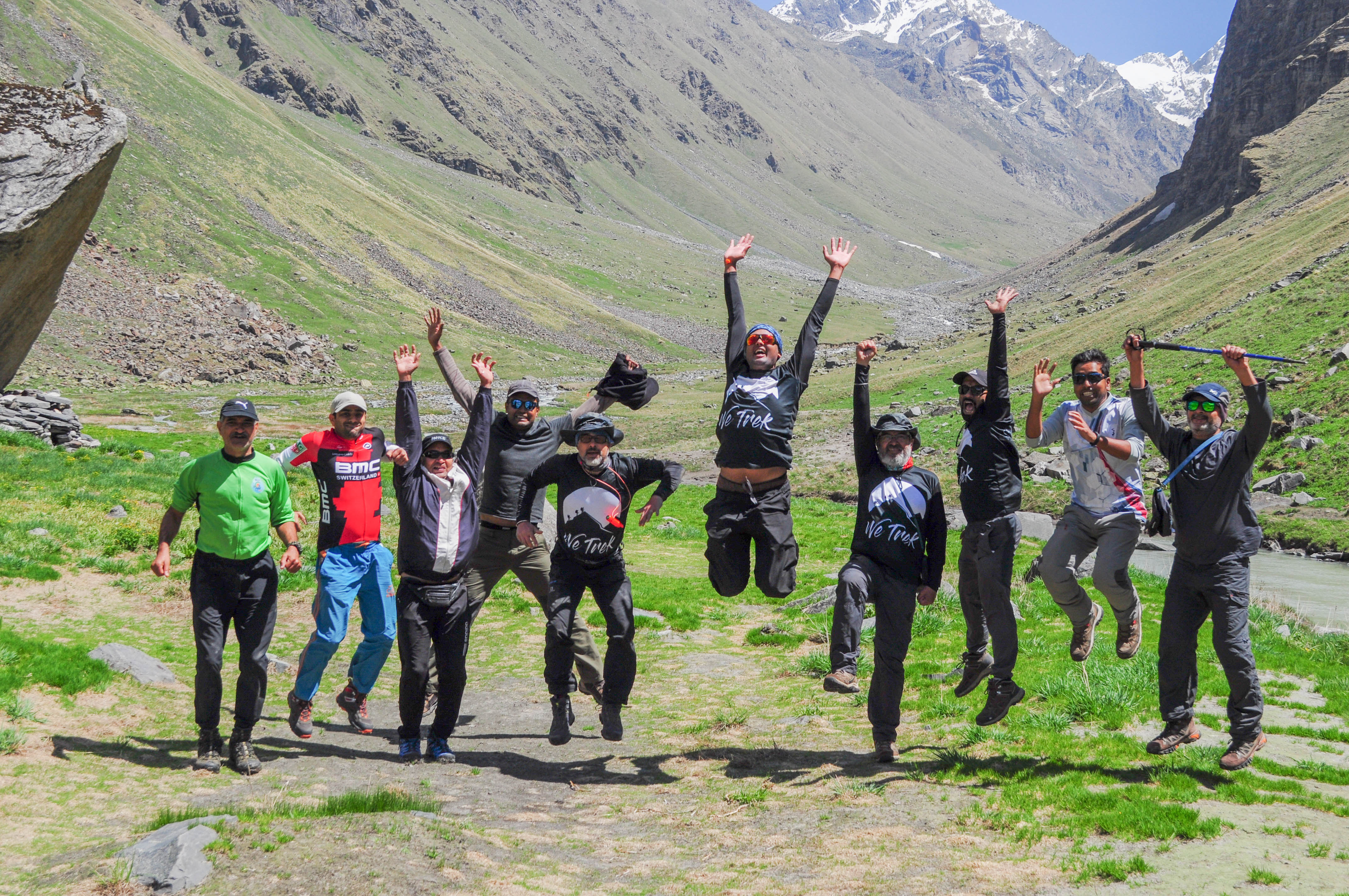
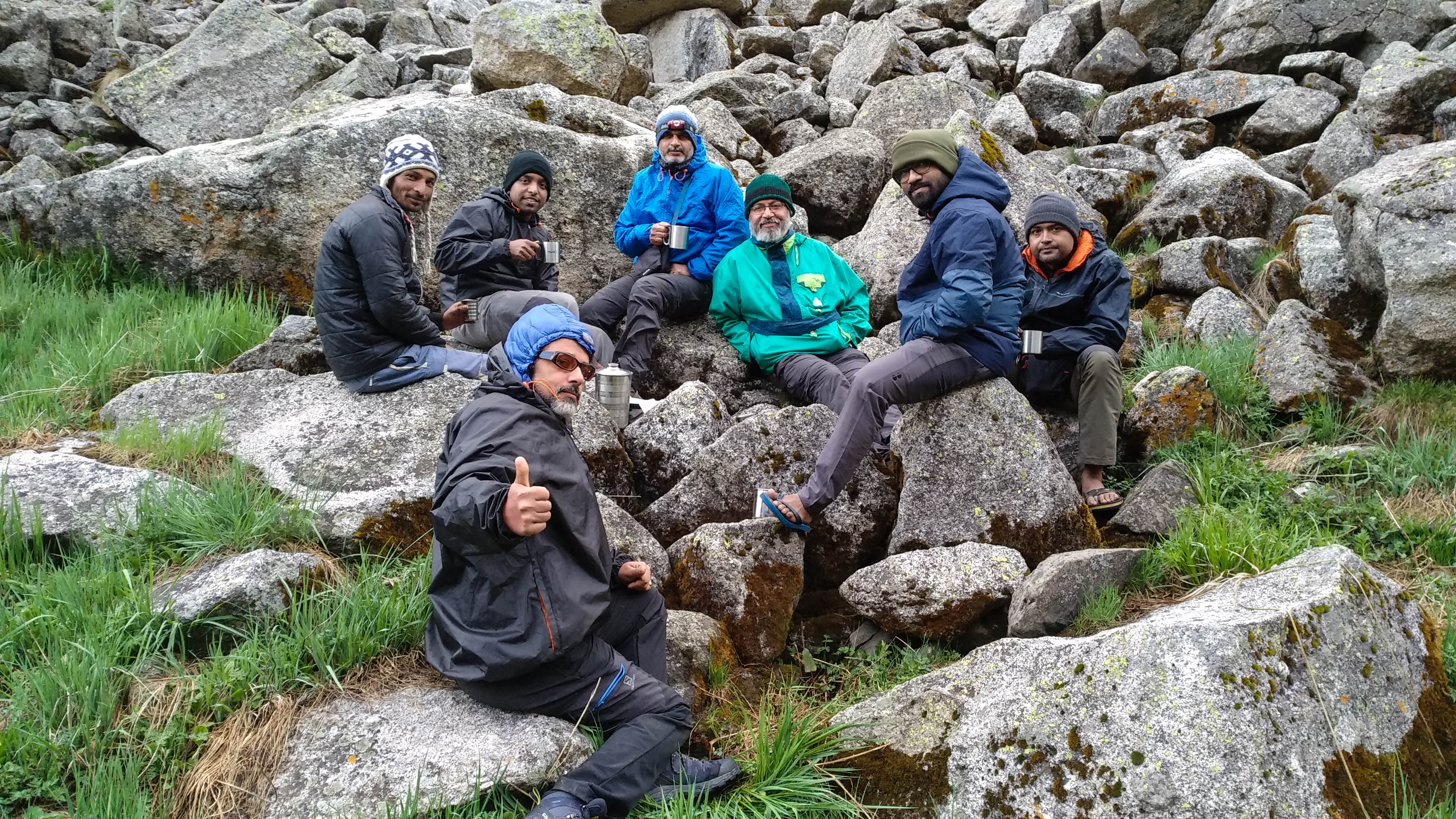
Navtej, Me, Raktim and Rahul. P.C: Birendra
According to the plan the next day was supposed to a “rest day”. But everyone was feeling well acclimatized and oxymeter was showing decent readings for all of us. So, we decided to move on next day. We had our sip of rum on a nature furnished rock stool that evening. Trek stories and future trek plans were all we had in the discussion.
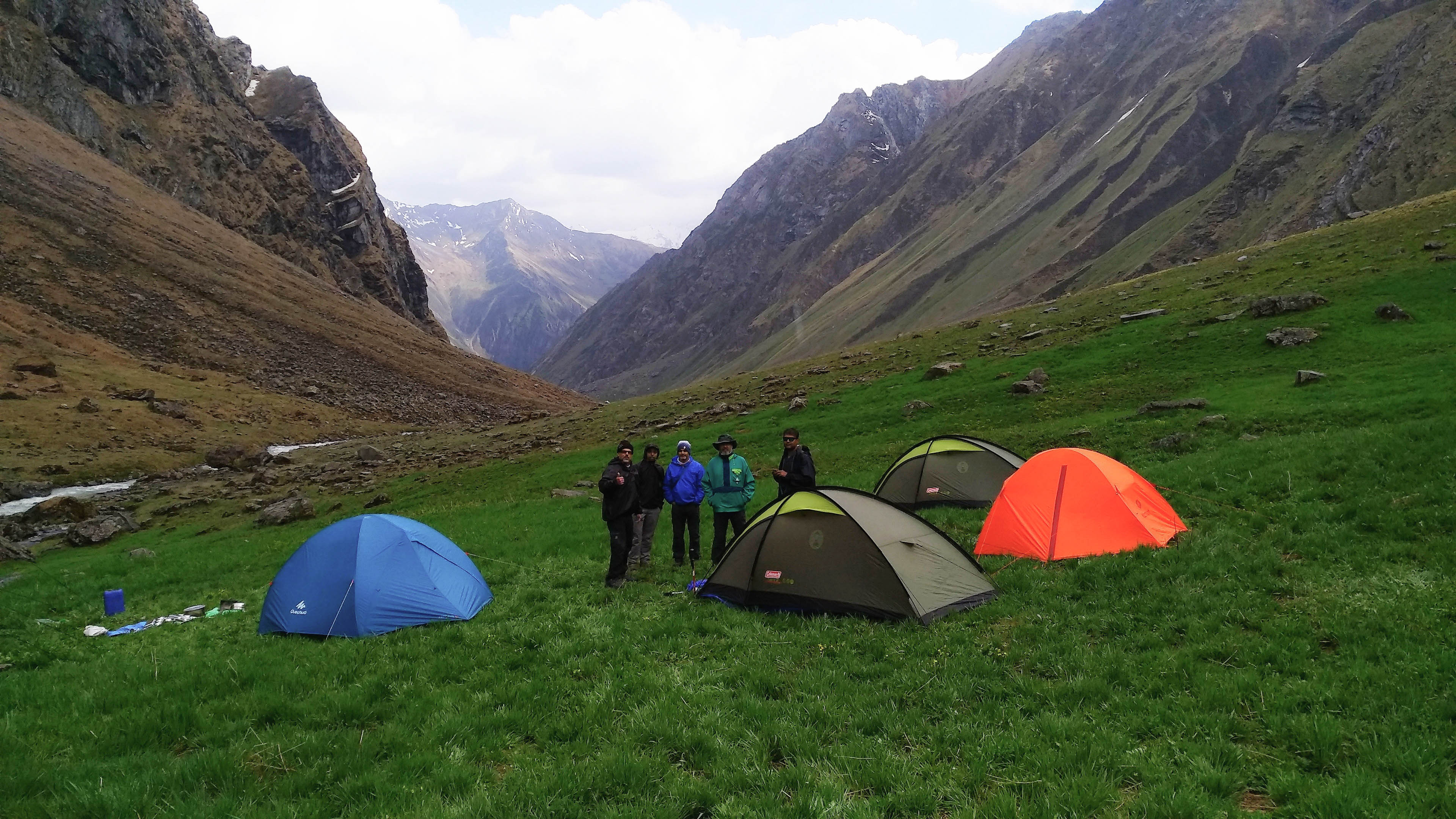
13th June, 2018 (Ratta-tho to Saunibhera, 4250 mt; 4.5 km trek)
As we had turned a rest day to move ahead, the plan was to divide a long and tough day into two. According to our original plan we were about to trek upper Lamjunga from Ratta-tho campsite. Jaychand Bhai suggested to pitch our next camp in between as upto Upper Lamjunga the distance was not much but the gradient was pretty steep.
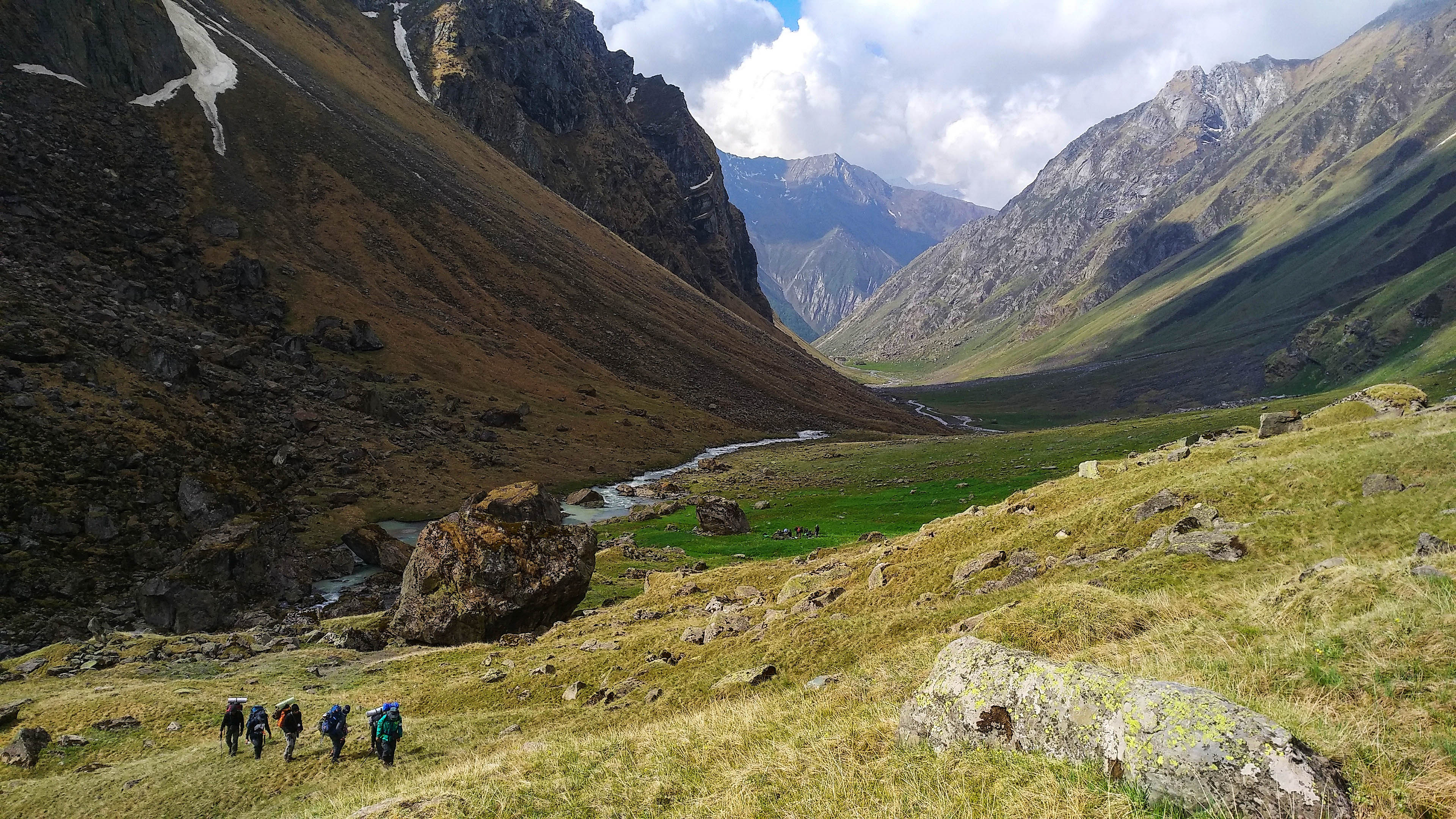
We started little late that morning. Dr. Sanjay was not feeling completely fine. He was little tensed about his oxymeter reading last evening and triggered physical weakness, I guess. The trek also was not an easy one that day. Lots of steep glacier moraines were blocking our way. All of them were loose rocks. Be it big or small doesn’t matter, without extreme concentration mishap can happen there any second. We lost the river which accompanied us till the first day of trek, on the way to climbing a ridge. We all were concerned about Dr. Sanjay, as after that day returning would have been very stressful and with a doubtful health one could not gain further altitude too. Navtej Ji almost planned for Doctor’s return with Birendra but Doctor was stubborn enough to move forward. In mountains and as well as in life, mental strength does miracles to physical activity. By the time we reached our campsite in Saunibhera, Doc was feeling much better. Harsha, because of his high speed, was about to climb a wrong ridge. Jaychand Bhai corrected him.
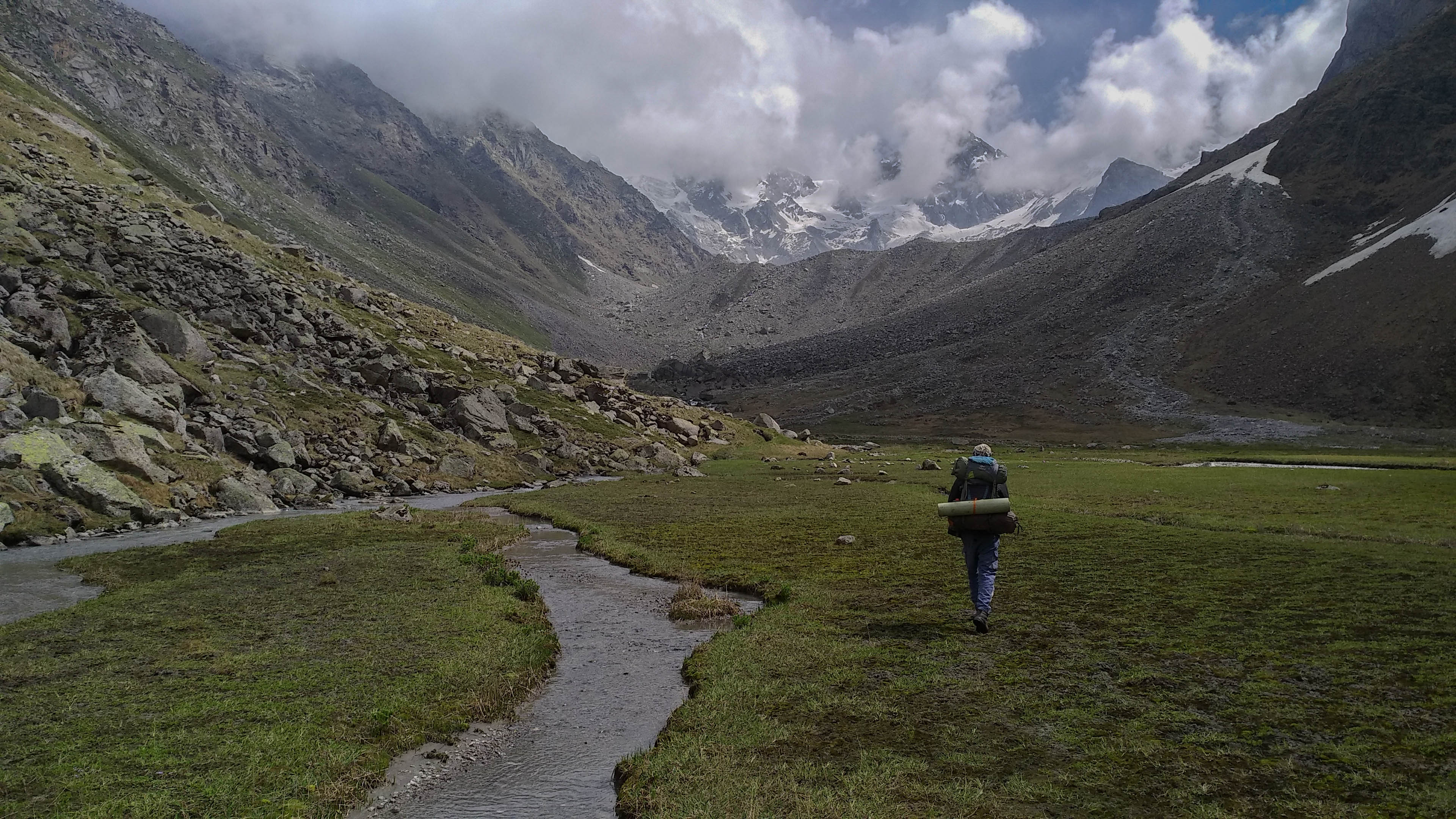
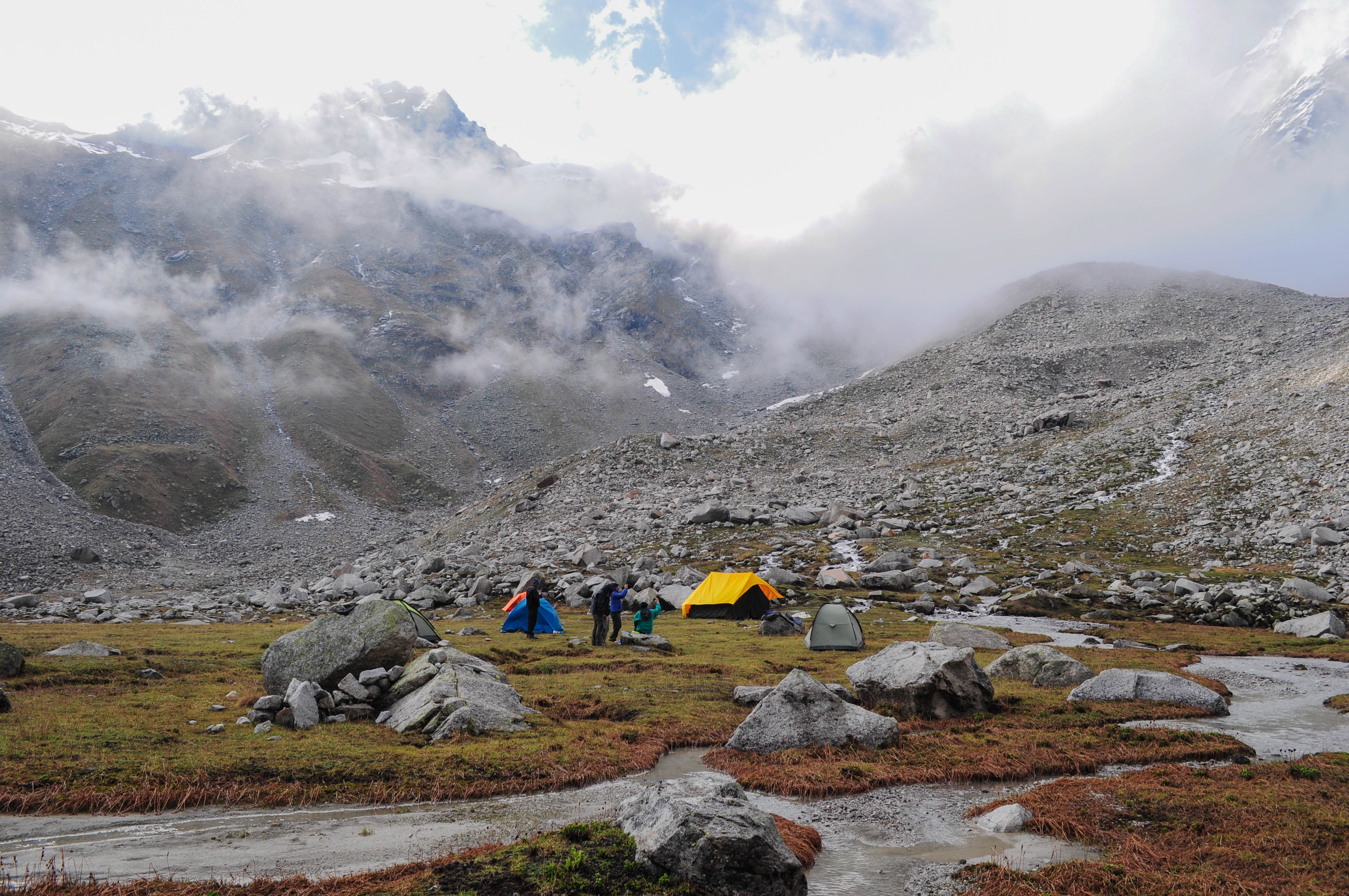
The campsite was full of small scattered brown grasses. We pitched our tents between few narrow streams flowing calmly toward the moraine we came through. These streams are one of the sources of Har Ki Dun Ganga. We were completely surrounded by big snowed out mountains all around. The only sound was the flowing of the streams. It was basically one big stream coming down from Borasu glacier and getting scattered on a plane ground. We were eager to see the Borasu pass but it was only visible from the next camp. Still we spotted the two peaks, between which the pass is situated. The altitude of Saunibhera is roughly 4250 meters. Layers of clouds and fogs were roaming over the mountains. No weather department can provide a forecast of a place like this. Mountain makes their own weather.
From this camp most of us avoided alcohol. I had consumed Diamox for last three days which, unfortunately, caused me loose motion. It was only the worry that triggered me to take medicine for this high altitude but I felt afterward that it was unnecessary. Even from that day I stopped the medicine and never felt dizzy.
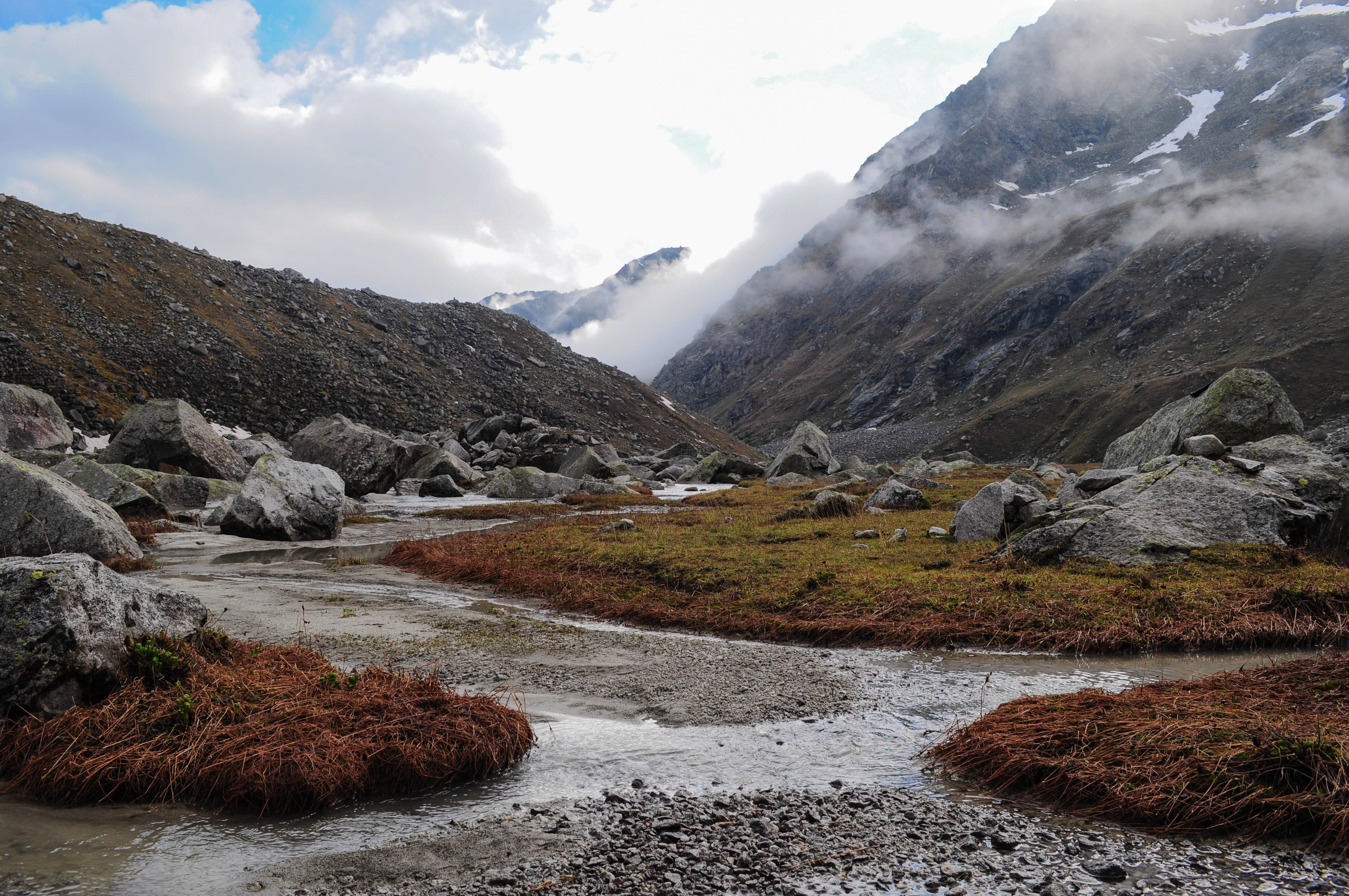
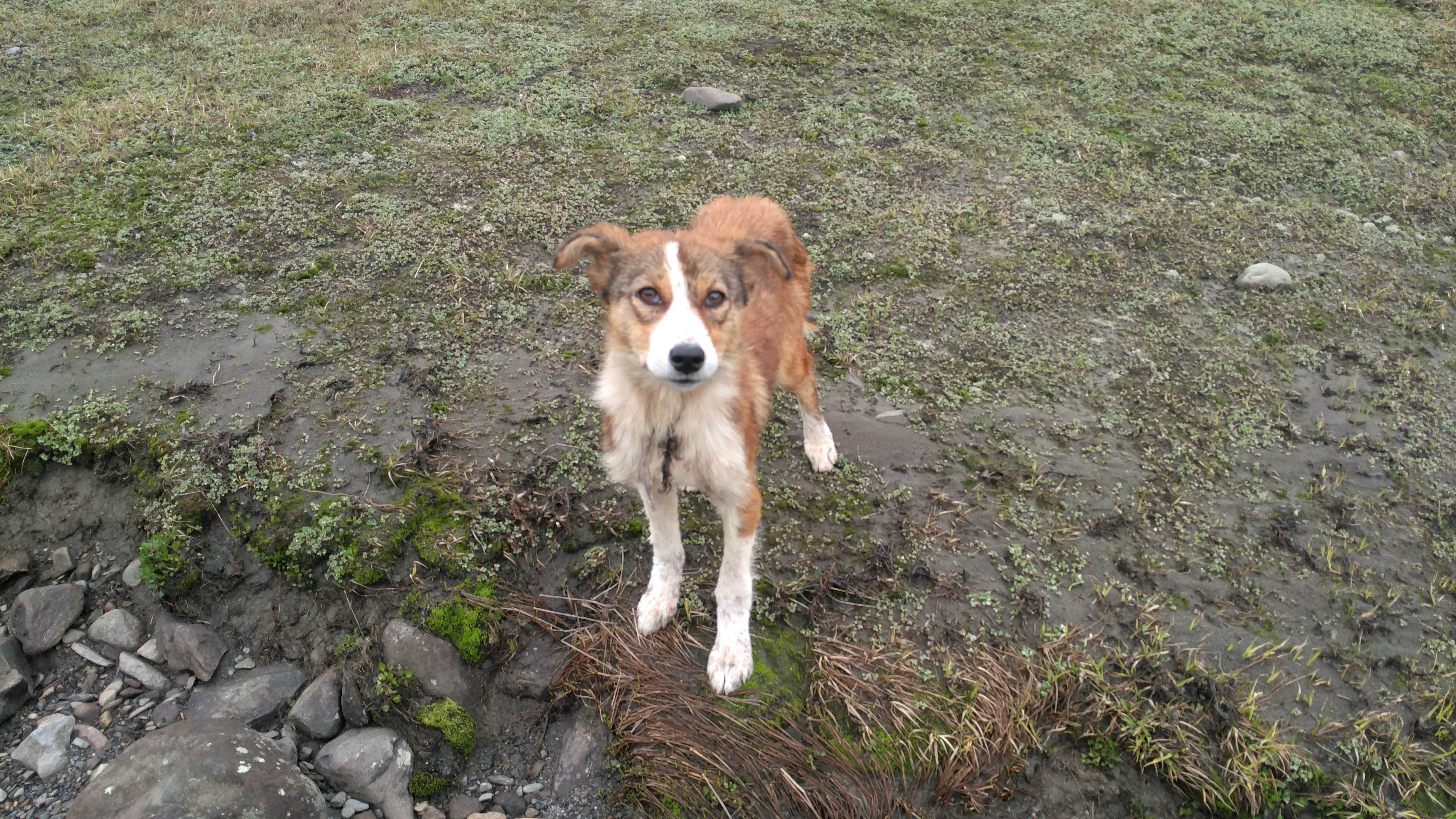
Service of the mules ends here. So, from the next day everything was to be carried by ourselves. The night was very cold because of the bowl-shaped structure of the place. We had our dinner in the warm kitchen-tent and then we went to sleep. Nobody noticed that a dog joined us here and slept outside the tent.
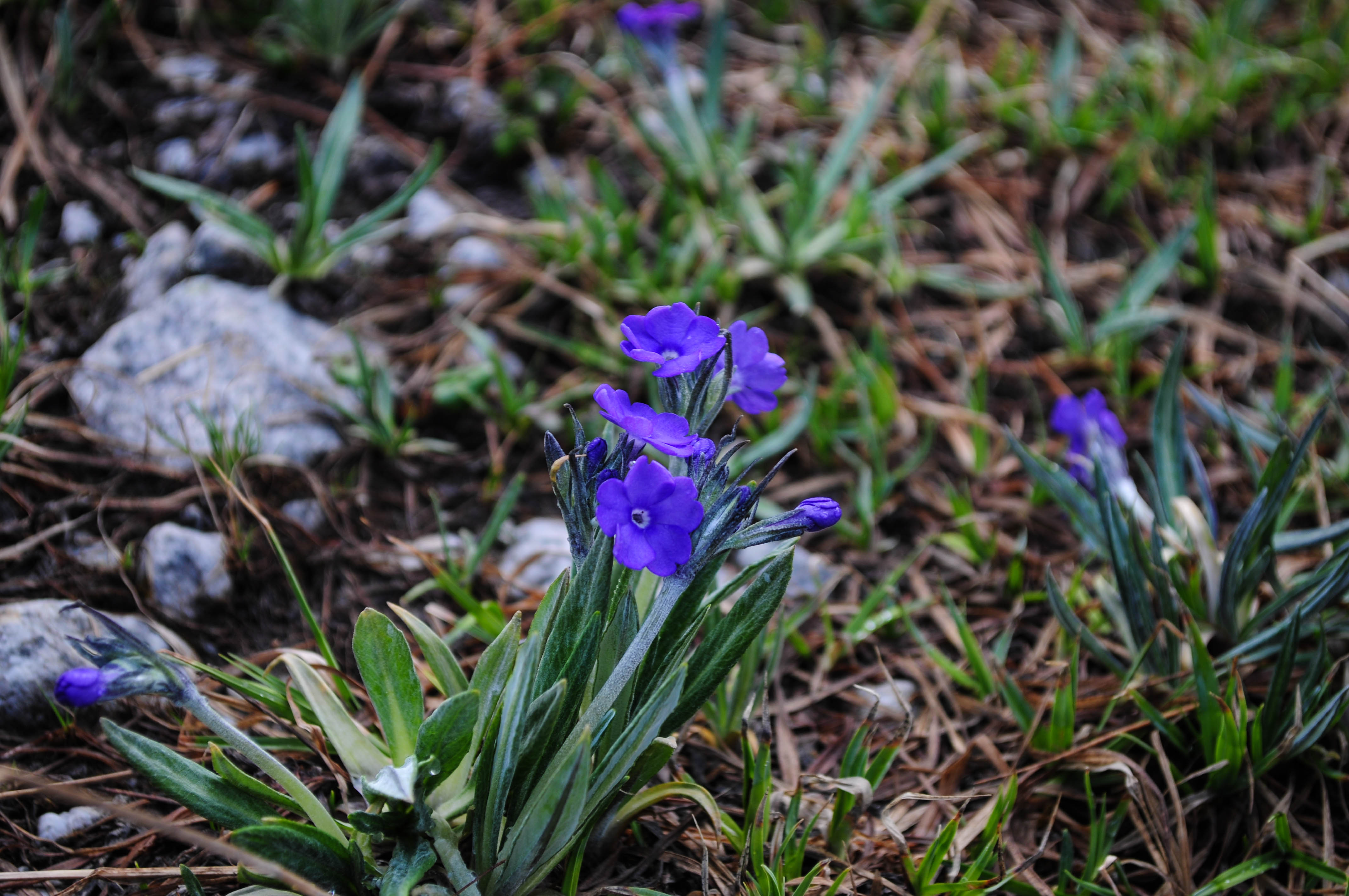
14th June, 2018 (Saunibhera to Advanced Boraru base camp, 4900 mt; 4 km trek)
Sunlight hit us little late that morning because of the huge mountains all around. We woke up at 7 and all were looking fresh including Doc, after a good-night sleep. Everyone was hungry for breakfast and Maggi saved the morning!! With our packed lunch of roti and vegetables we started climbing around 10.
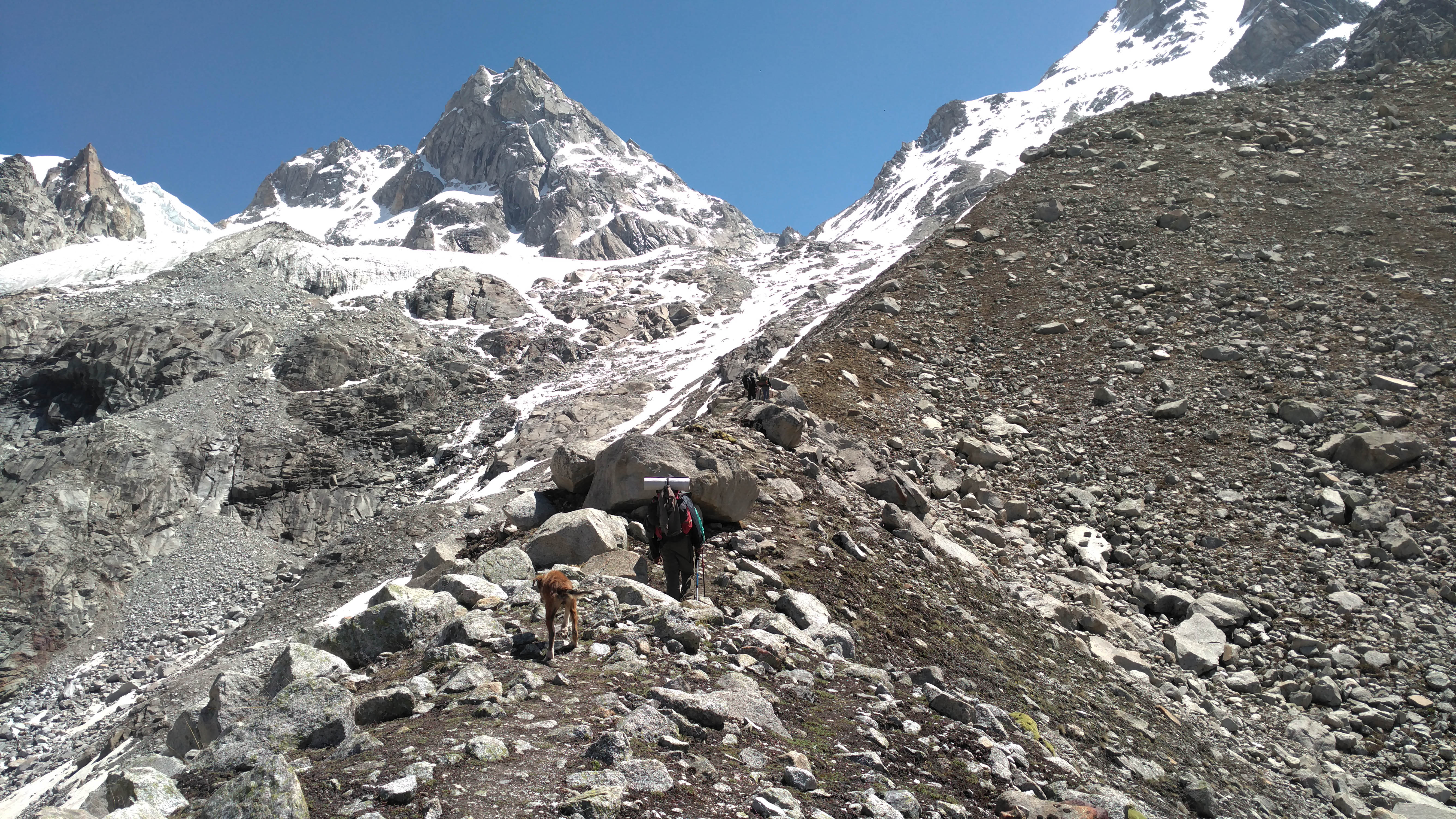
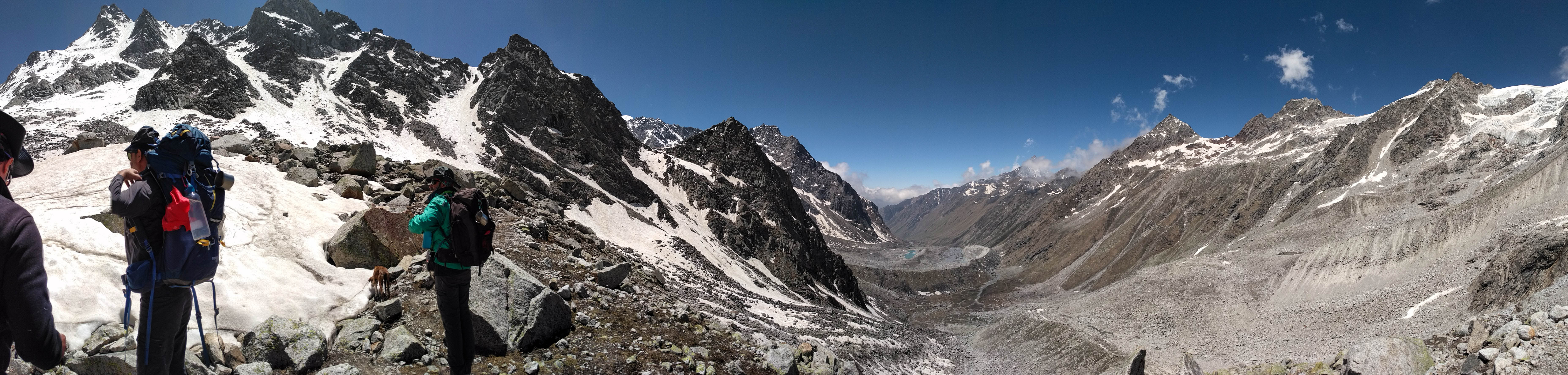
The highlights of the trek began. It was not the distance we had to cover, but the steep mountain we had to climb. The gradient was 45-50 degrees constantly, sometimes more. The whole route was glacial moraine with all loose rocks. The one going forward needed to be more cautious and maintain the grip continuously. If one rock rolled down, the whole team behind could be in danger. So, we were moving slow but steady. Half of that day’s trek was sunny till Upper Lamjunga. It was maximum of a kilometer of trek but it took the best efforts out of us. From there we could still see our last campsite beneath. On the east of our Saunibhera campsite there was a huge ridge blocking our vision. A glacial lake could be seen over that ridge. This could have been another source of Har Ki Dun Ganga. We left the dry grasses behind, it was only ice and rock thereafter.
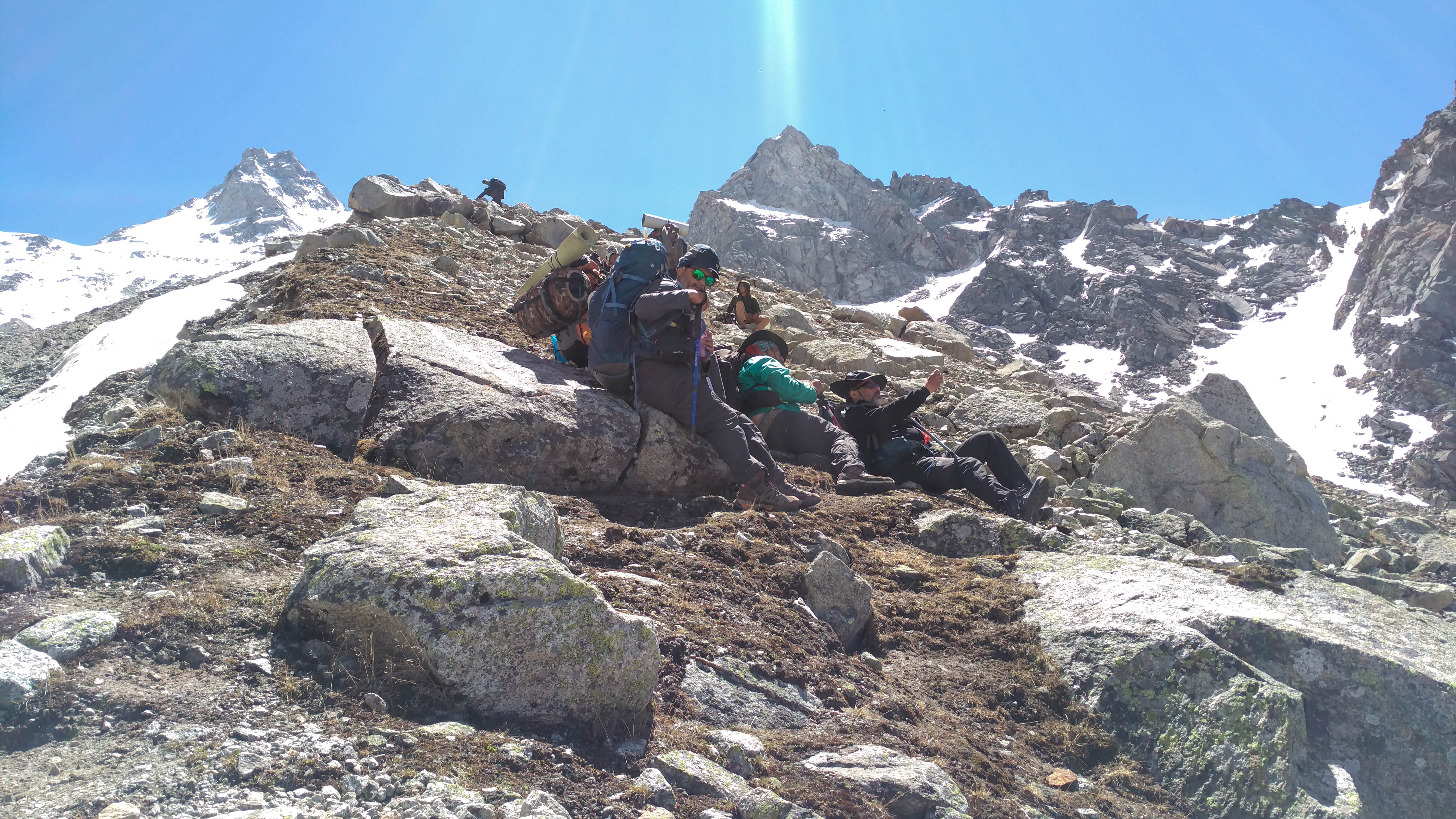
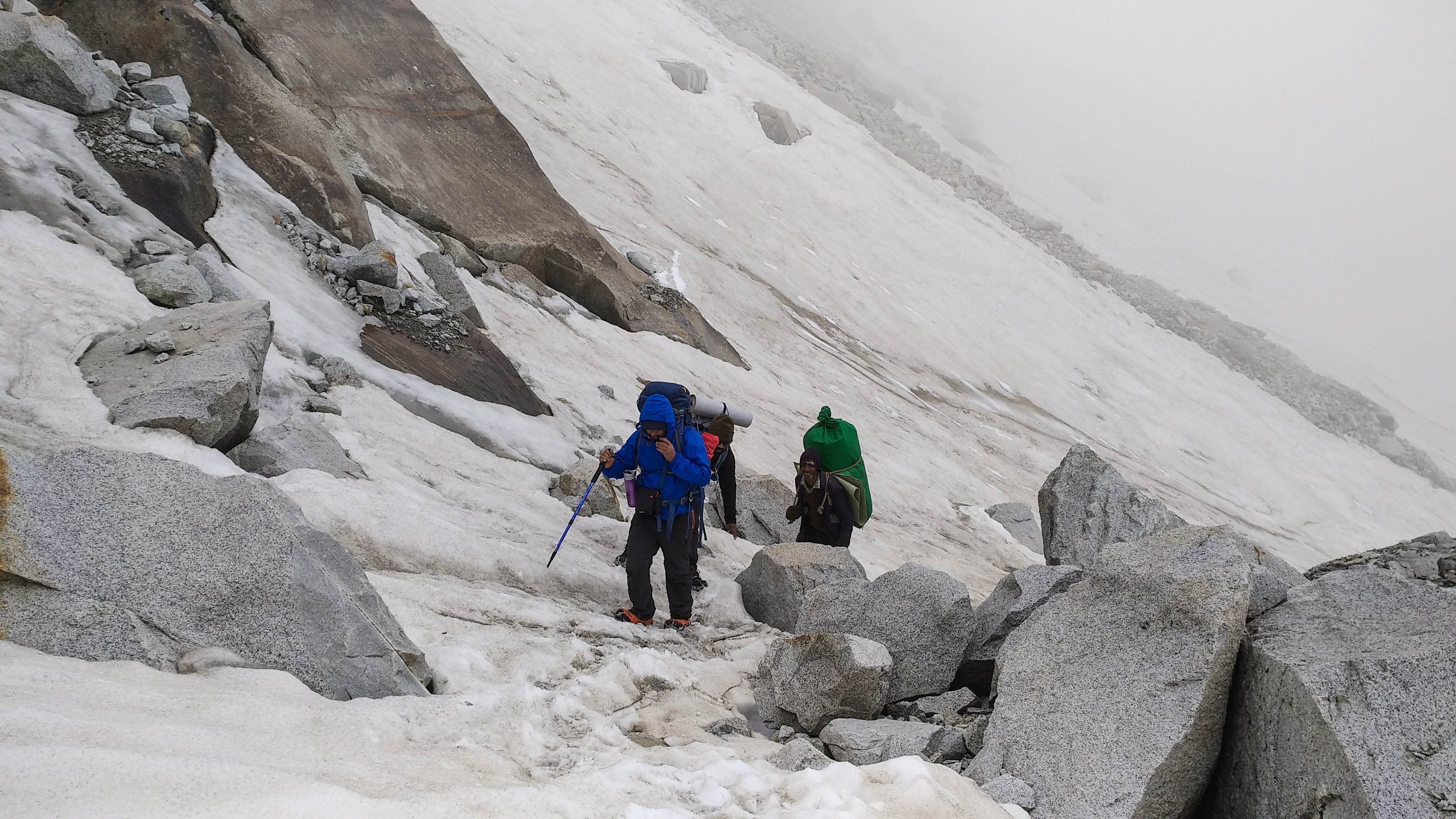
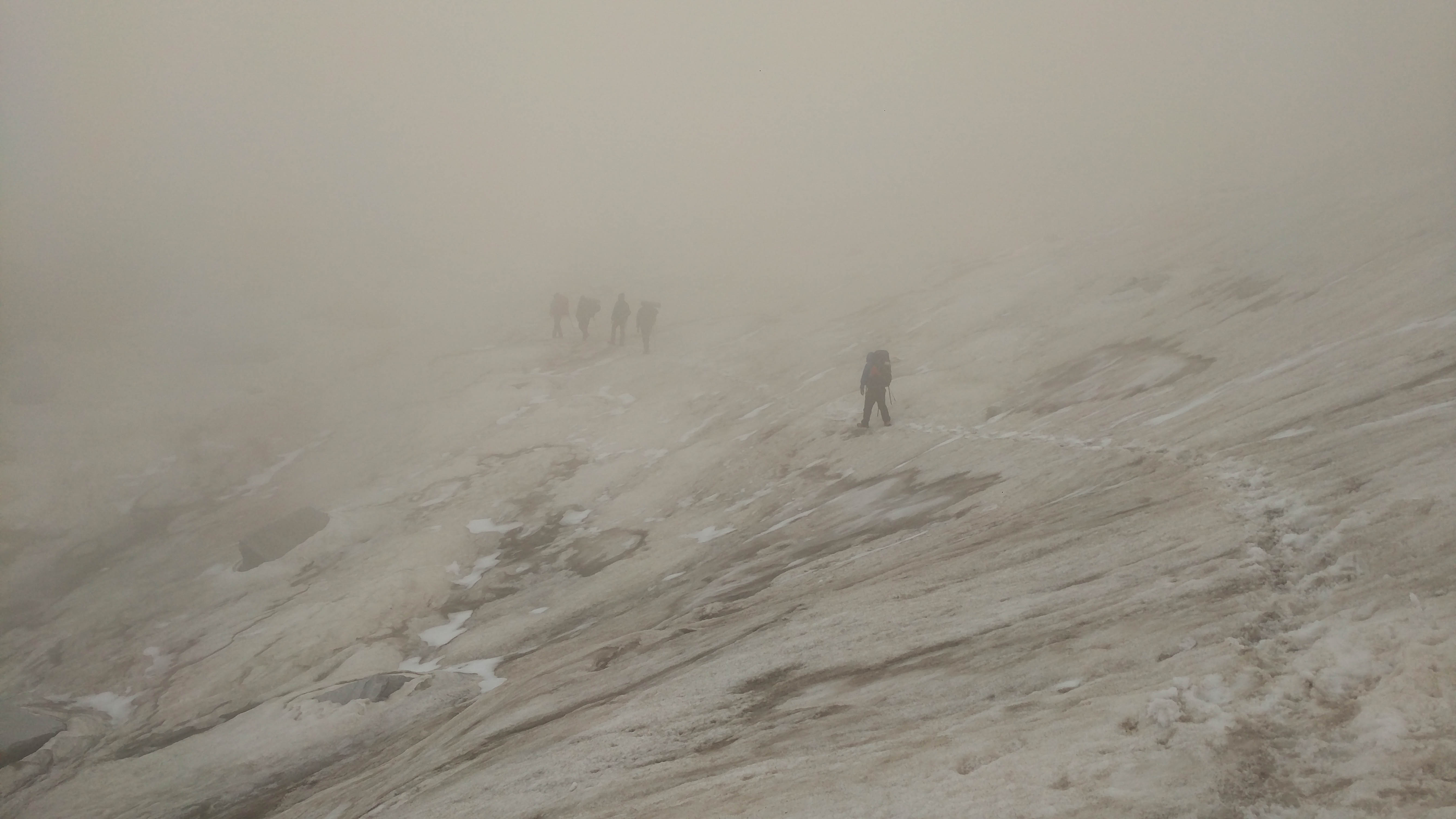
We had our lunch in Upper Lamjunga. This place was not enough to pitch our all five tents. Jaychand Bhai explained that there is better place to pitch all the tents and the place is just beneath the pass itself. We all had enough fuel left in us, so we started climbing again. The weather started to turn cloudy. After a 30 mins, the visibility was maximum 5 meters but the steep stays the same.
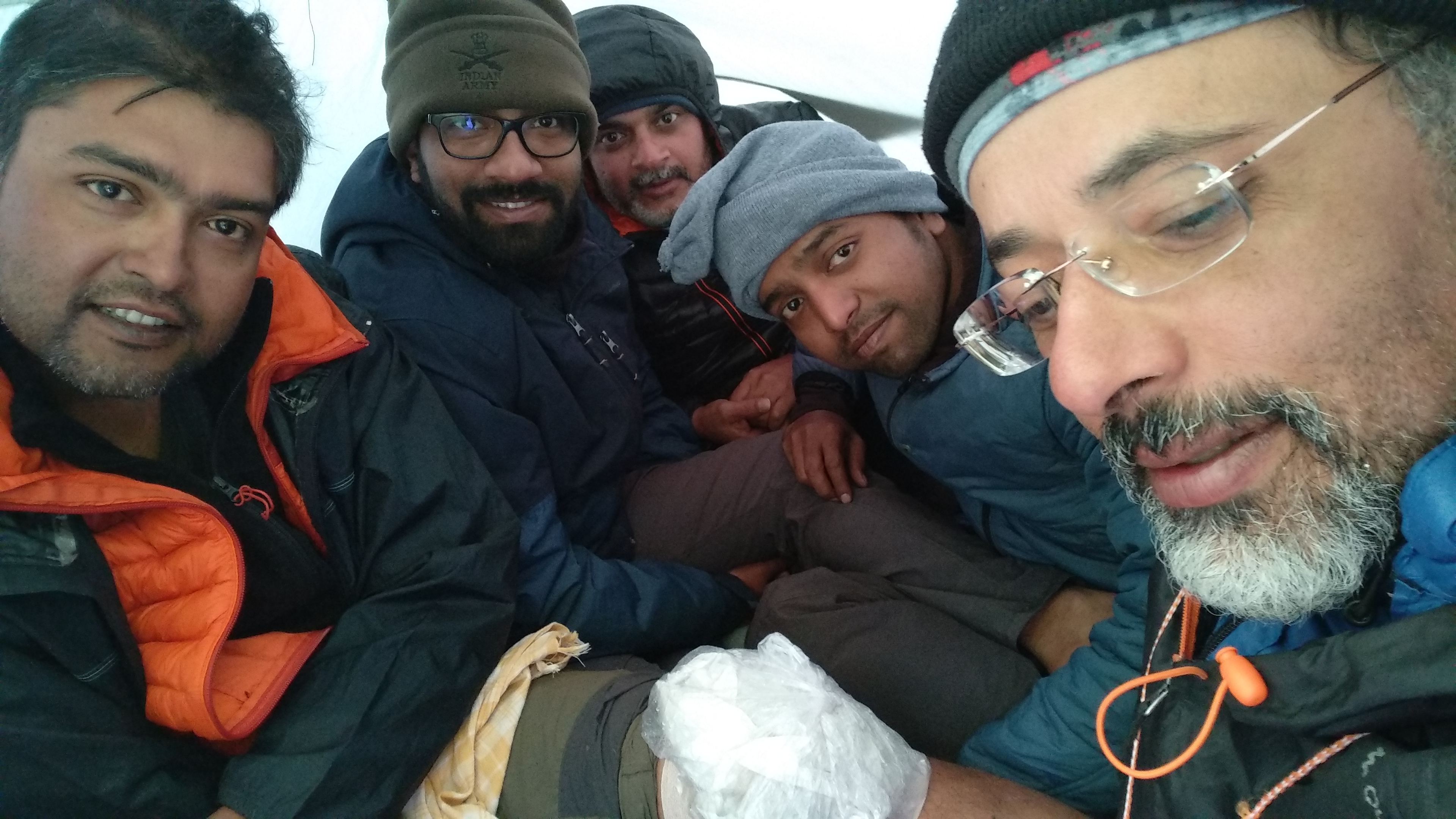
Snow started to accompany the loose rocks beneath our feet. We were climbing roughly in two vertical rows. I was the last guy of one row and Sayan was the last of the other one. Suddenly Sayan twisted his right leg between rocks, fell down and started sliding. There was none to hold him or slow him down. He somehow used his other leg and hands to slow down and stop. Thank God, he was sliding head up. Jaychand Bhai ran and grab him to a comparatively stable big rock. Doc done a excellent job of wrapping a crape bandage tightly after applying some ointment around Sayan’s knee. We put on the crampons here. The concern was that if Sayan could still make it as the main climb was set the next day. Anyway, he covered the rest of the distance limping but without any help.
The weather in the campsite was comparatively fair. We saw the Borasu Pass way up in the north-east for the first time. It was all snowed out there, only few big rocks were visible out of the snow. That day, for the first time, we reached campsite before our supporting team (obviously Harsha was making it everyday). We were carrying our own sleeping bags too, but all the kitchen staffs were upon them including the LPG cylinder. They arrived after 30 mins and pitched the tents. The dog accompanied us all the way up here. But it was not comfortable on the hard snow. Its toes were reddish in the cold and it was afraid to take the next step. Sayan and Rahul Bhai set up a resting place for it inside their tent and some food was also arranged for it.
The campsite was shaped like tortoise’s hinge-back. The steep toward Borasu looked like 50-55 degrees. It is very easy to get confused over here. As two-three other mountain junctions looked same as the pass. I felt sorry about the Argentine solo trekker. He should have come with an experienced guide. The wonderful thing that happened then was hot coffee and pakoras had been served on that challenging weather. Nobody was tired and all gathered inside Rahul Bhai’s tent. Sayan was taken care of by Doc again. He was feeling a bit nervous. I did not know the particular medication but a Diamox worked a lot for him to get over it. Doc made an ice-bag for him out of the snow. The coming morning was awaiting for us with the final challenge.
15th June, 2018 (Advanced Boraru base camp to Borasu Pass, 5400 mt to Bonga, 4500 mt; 14 km trek)
The excitement of the final climb didn’t let me sleep long and I got up around 5:30. Others had the same adrenaline rush too. The plan was to start as early as possible, as the sunlight makes the snow melt and the climb challenging.
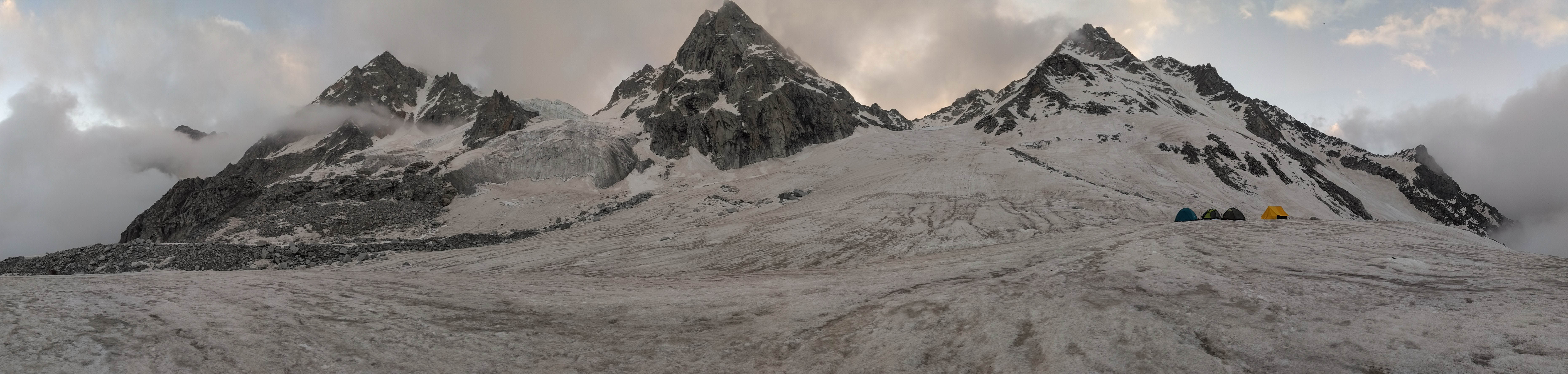
We had breakfast and started by 7:30. First 15 minutes was a decent slope. Then came the climb that we were longing for. It was a continuous 50 to 55 degrees climb till the pass. The weather was quite fair all the way up. We all struggled but it was quite a challenge for Sayan with a wounded leg. There was proof of avalanche by the right-hand side of our route. Snow was looser than expected and our steps were submerging inside.
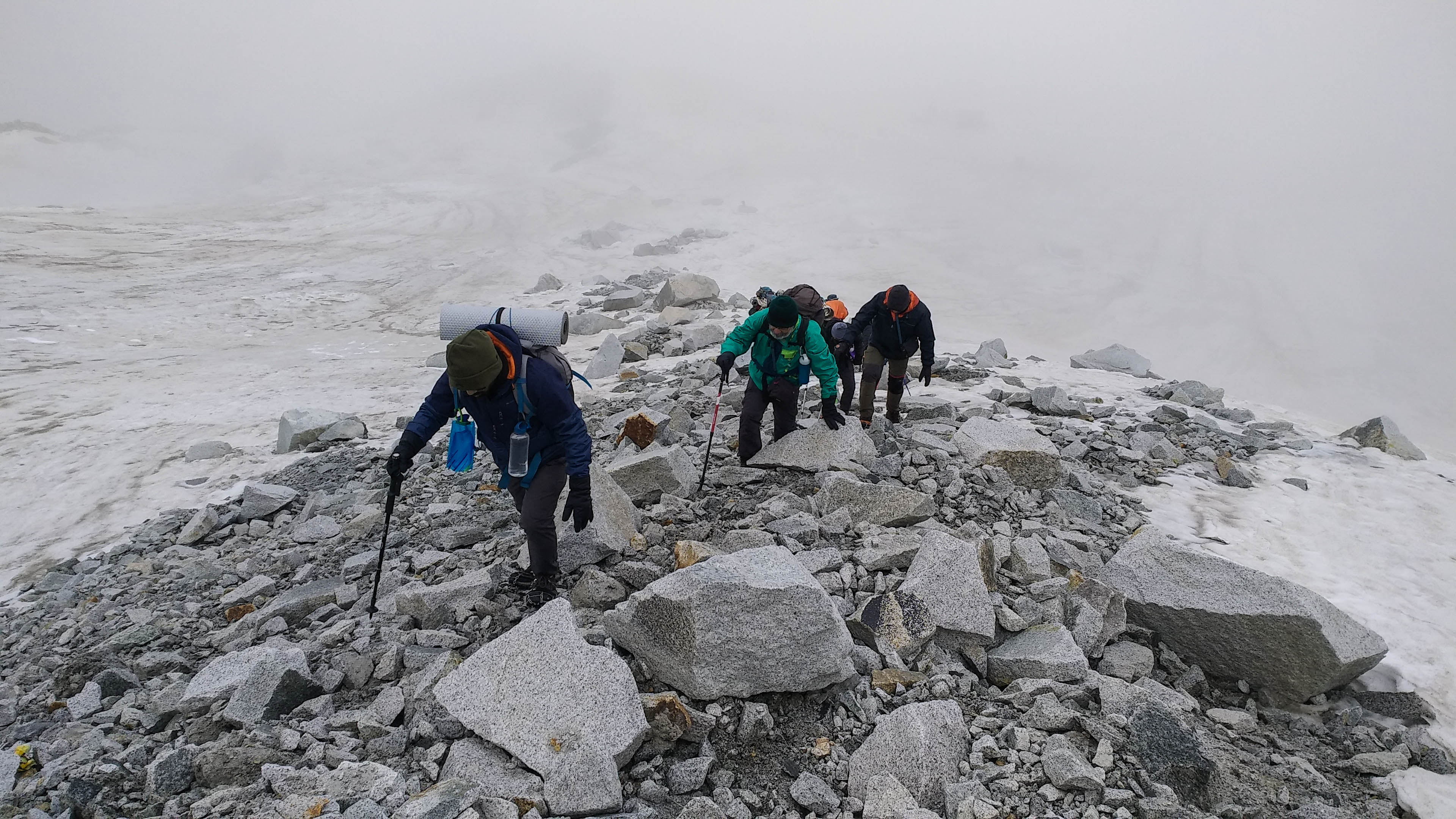
Jaychand Bhai guided us through the safest route possible. He even made some steps on the ice with his axe. There was 50-60 meters bottle neck just before the pass, we all needed to put our best there. As usual, Harsha was the first one to reach the pass. We all made it to the pass one by one. Jaychand Bhai was carrying Sayan’s backpack. But It was quite amazing mental strength that Sayan showed up and climbed up that challenging mountain without any help.
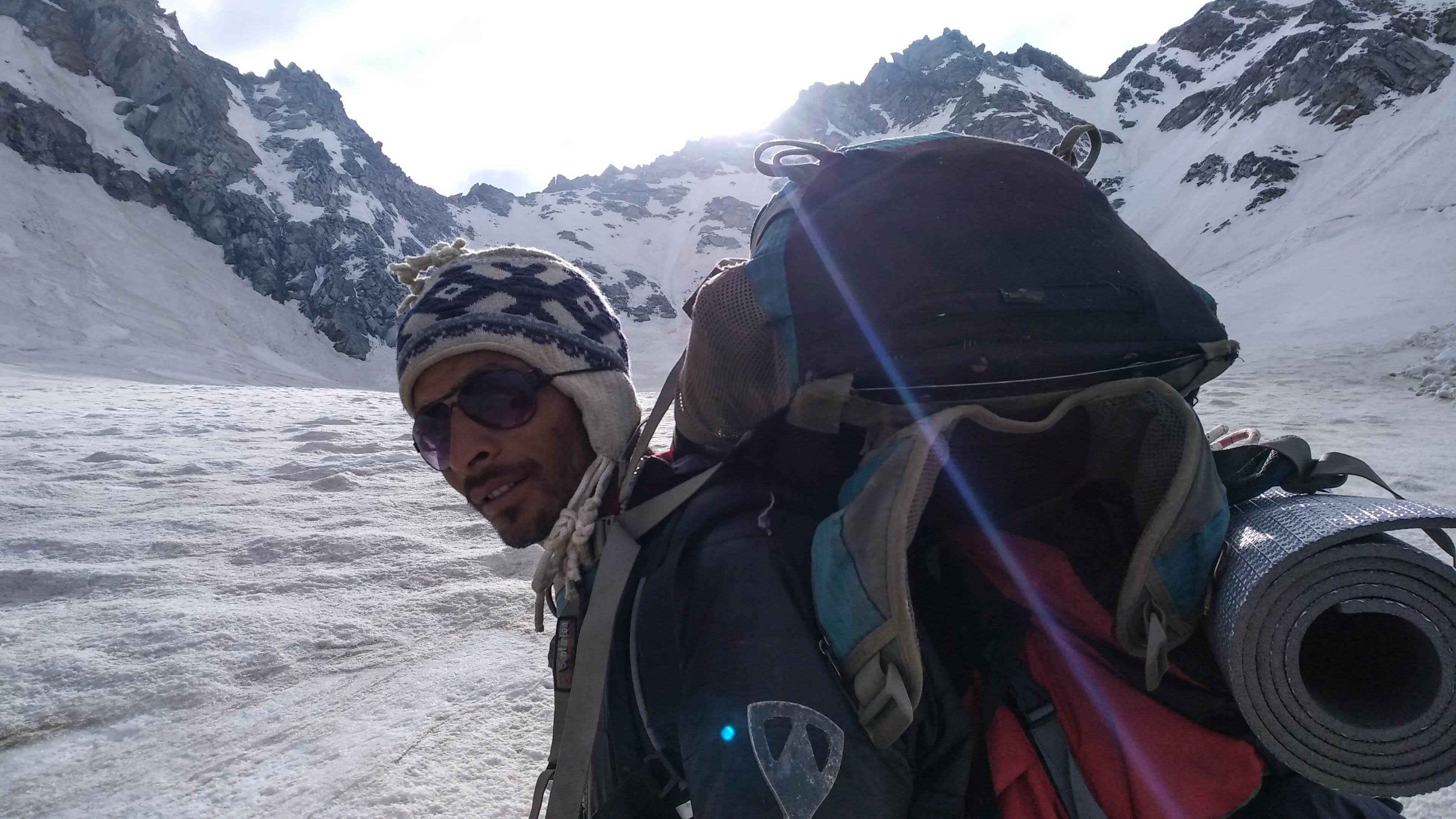
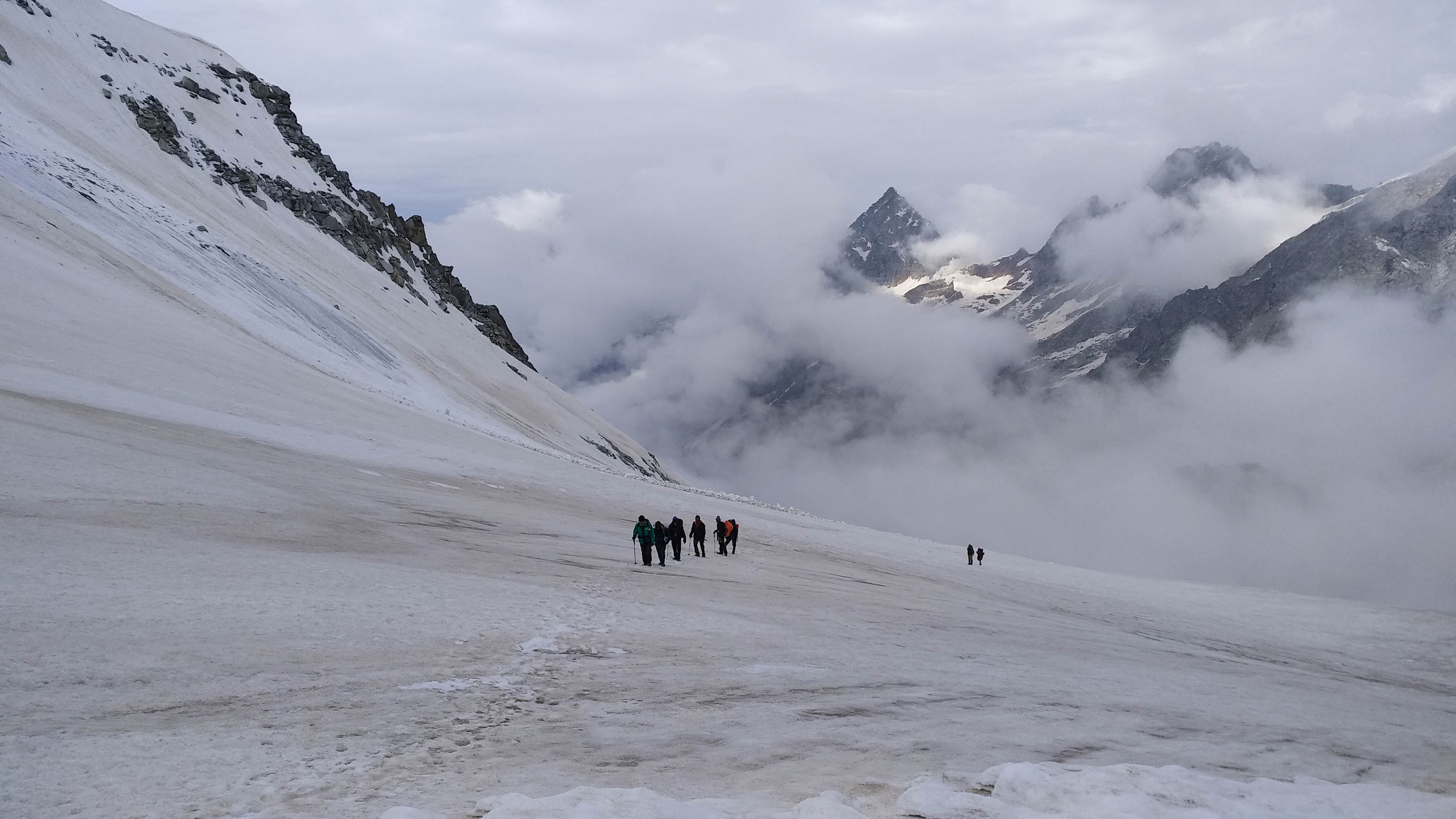
The dream of reaching a high Himalayan pass turned real. The whole group was cheering, hugging each other, clicking photos. But none of those celebrations felt enough. It was a very narrow rocky space on the pass where you can rest a little. We could see the support staffs beneath as dots, who started a little late. There is a small temple on the pass, which is made of loose rocks. Our support staffs came up within 30 minutes. They were superfast with their heavy loads. All of us offered puja as it a ritual of crossing any Himalayan pass. The Himachal part was almost fully snowed out as far as we could see. The joy of getting up there, dissolved the thought of getting down. After an hour of celebration when we peeped our heads to see the slope down on the Himachal side, it looked scary. It was a 70-75 degree decline. Before today, each one of us asked questions to Jaychand Bhai about the struggle of getting up there, but none asked a single question on the struggle of getting down.
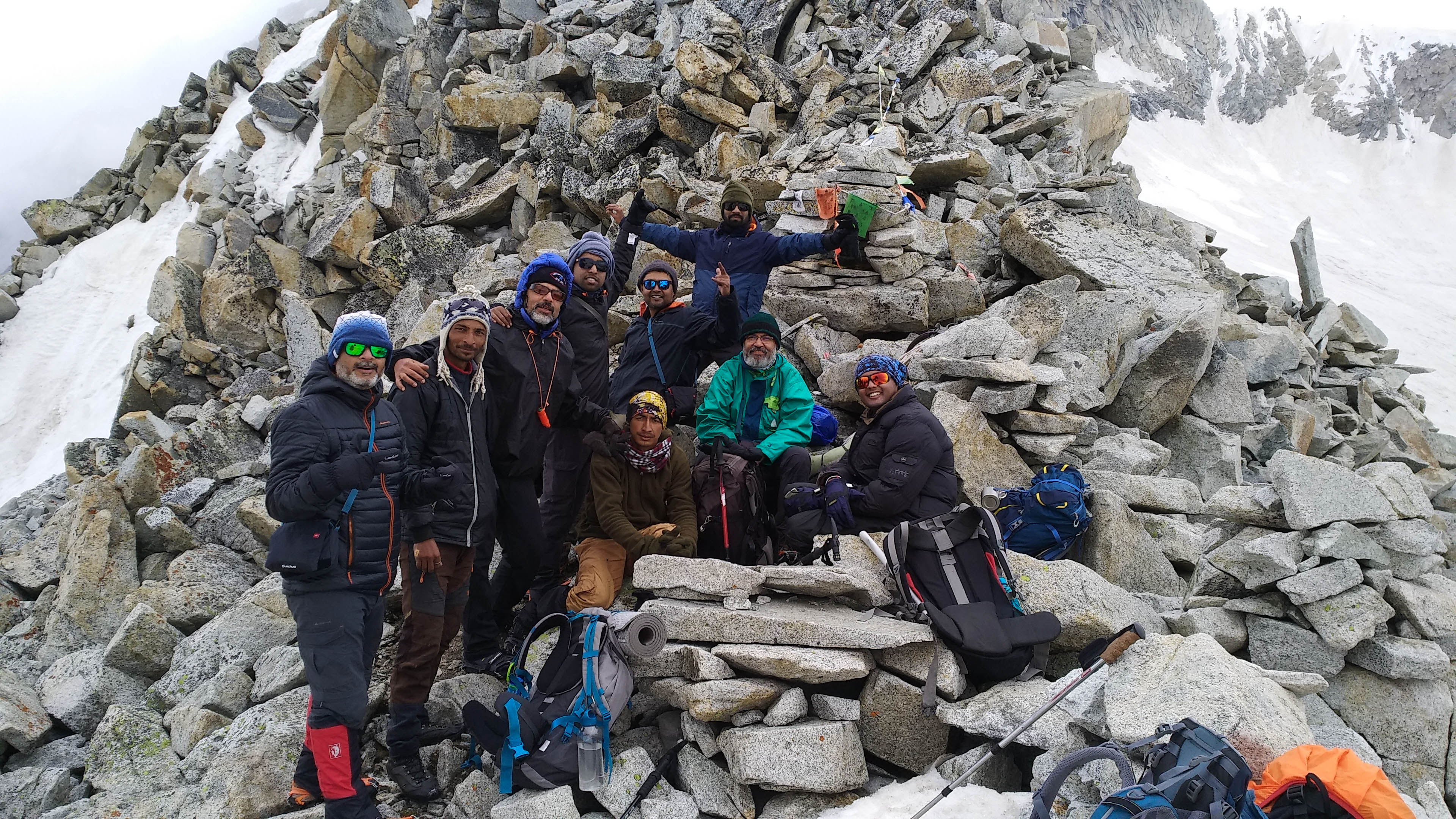
Birendra was carrying a rope with him, and it was finally the time to use it. They fixed the rope on a big rock. We started glissading down with the support of the rope. Navtej Ji was the first person to go down. Then it was Harsha’s turn. His left leg got stuck in soft snow in-between and when he pulled it up,the shoe was lost inside the snow. We all came down one by one glissading on that adventurous snow slope. The support staffs tried searching the lost shoe but ended up unsuccessful. One can easily imagine about the challenge of walking barefoot on snow.
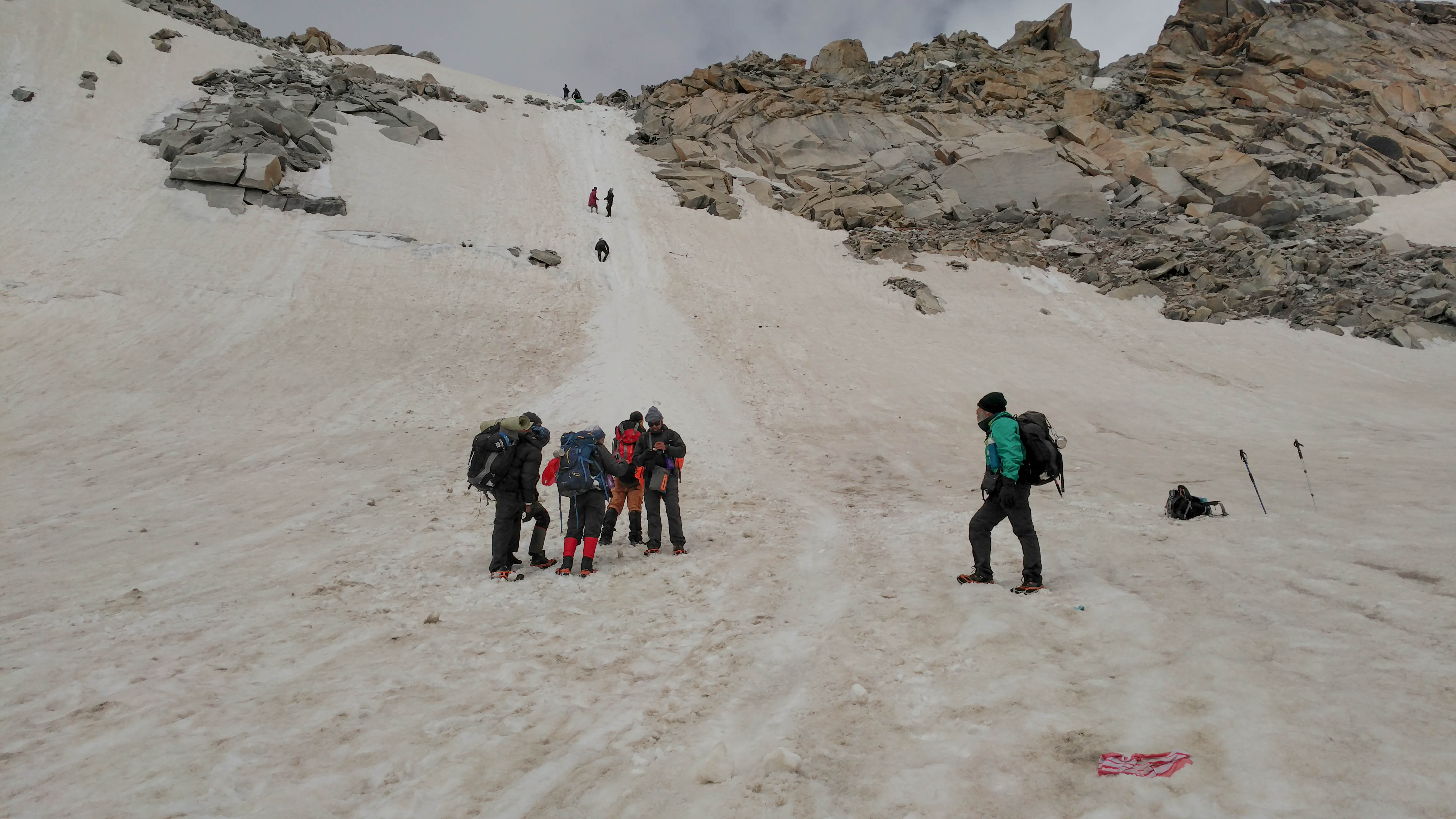
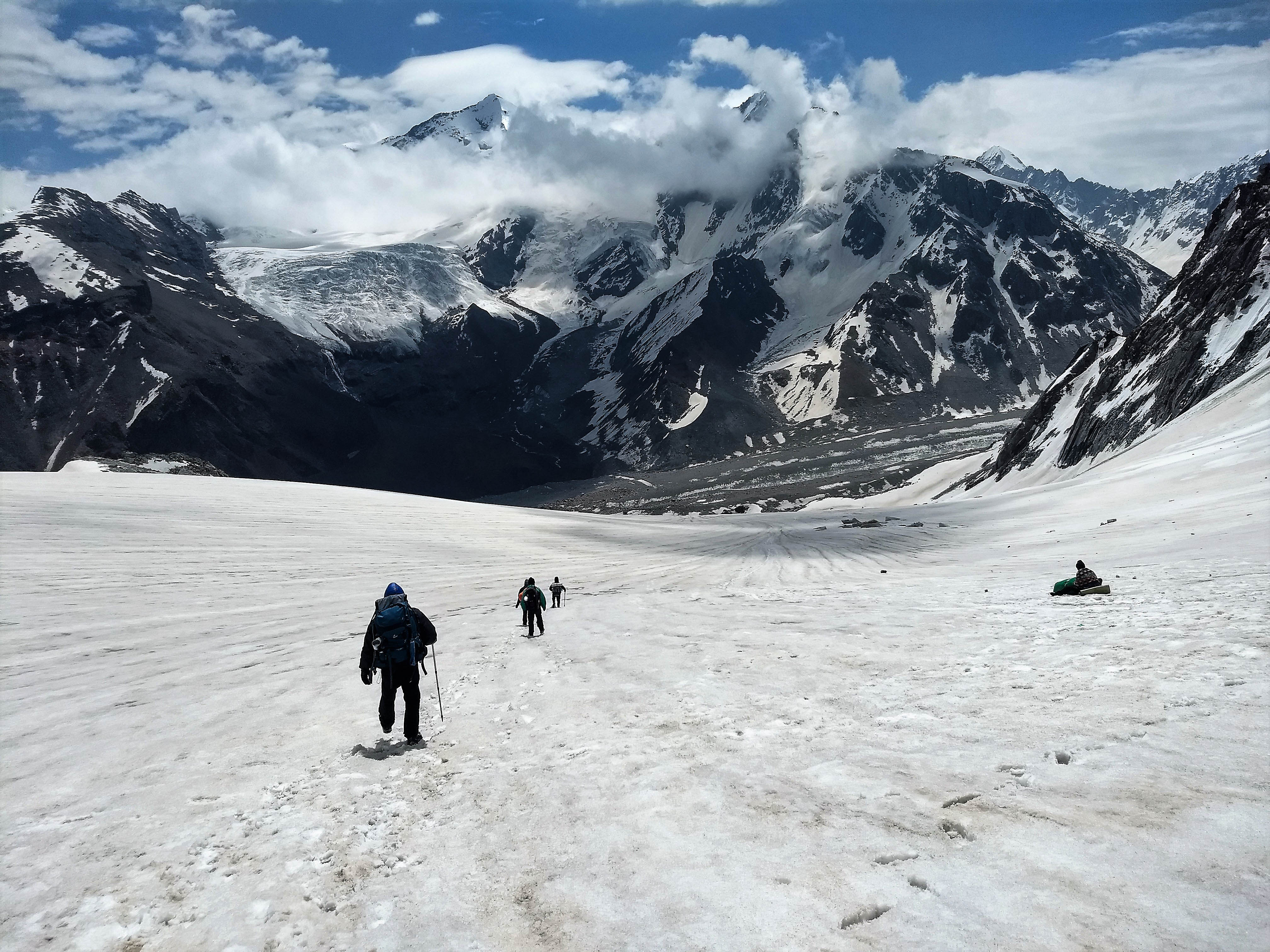
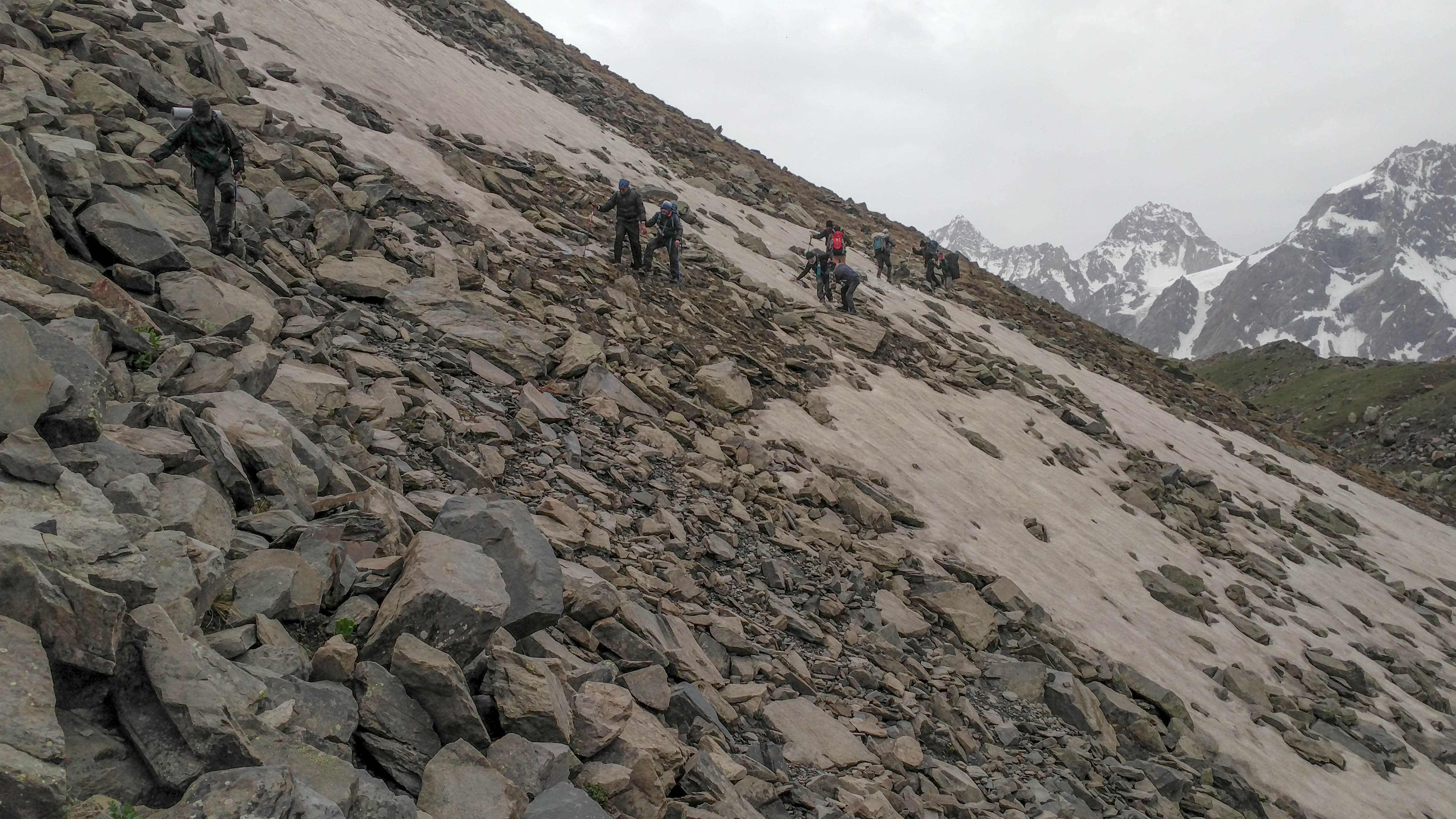
The next kilometer was fun. It was a snow field. Some glissaded, some walked with stretched legs. Then came the toughest part of the whole trek both mentally and physically. Within a kilometer the snow started to dissolve. We detached the crampons and started climbing down. What looked like a smooth surface a 500 meters back, then turned into rough glacial moraine. This was Borasu glacial moraine of Himachal side which meets other neighboring glacial moraines in next 1 kilometer and creates a huge stretch of loose rocks.
As we progressed, some figures in camouflaged cloths started becoming visible far down. Birendra and some support staffs were ahead of us. One of them came near us and told that they were ITBP guys waiting with a dead body for their team to arrive. It was shocking.
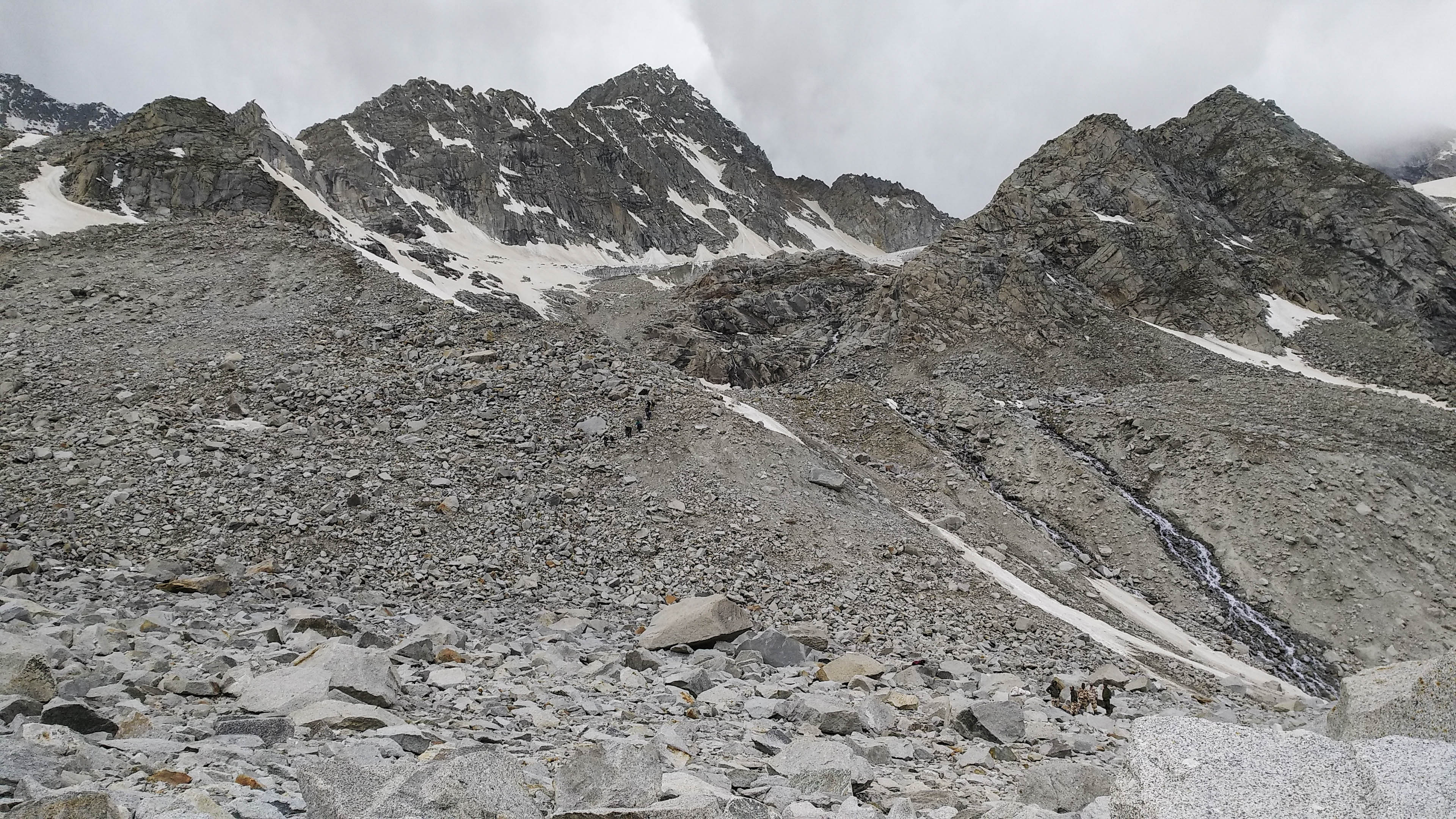
The body was wrapped in a camouflaged raincover. The dead guy was one of those who crossed Borasu on 13th. He was heavily panting while climbing the pass (probably having some signs of AMS), and then sipped water in that situation and chocked immediately. The other teammates and support staffs somehow dragged his body down and informed the ITBP camp, which was almost 30 kilometers away from there. We all were scared that a guy passed away while crossing the same mountain we had just crossed. Later after we got back in civilization, Rahul Bhai found out that the guy was from Mumbai and named Harshad Apte.
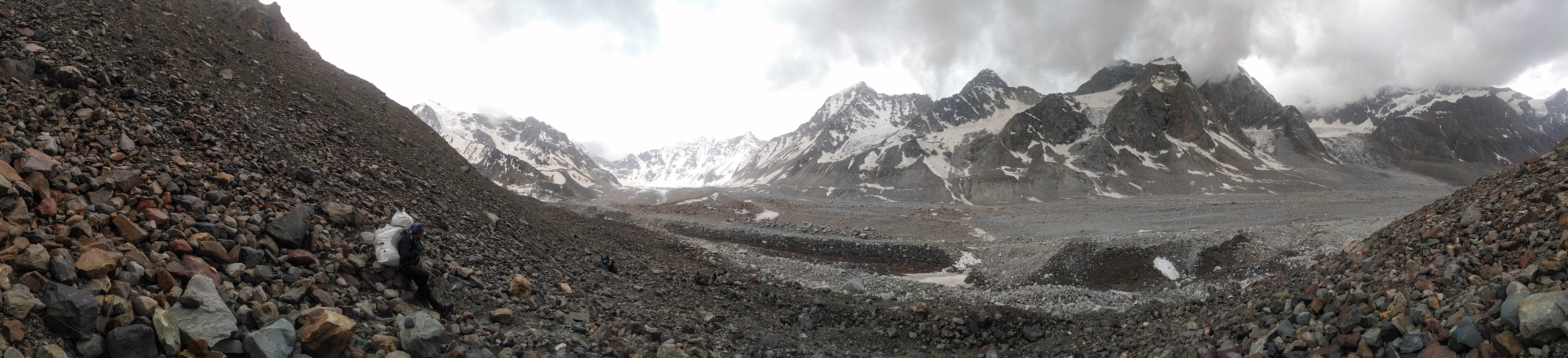
It was 1 o’clock already. We somehow ate our packed lunch sitting on the next rock to the dead body. Harsha left his other shoe there, he came that far by wrapping his one leg with some spare plastic bags. We started walking again on the unsteady moraine. It took us more one and half hour to cross that terrific moraine stretch. Then we climbed a small ridge that was comparatively steady. With the borrowed slippers Harsha was still well ahead of us.
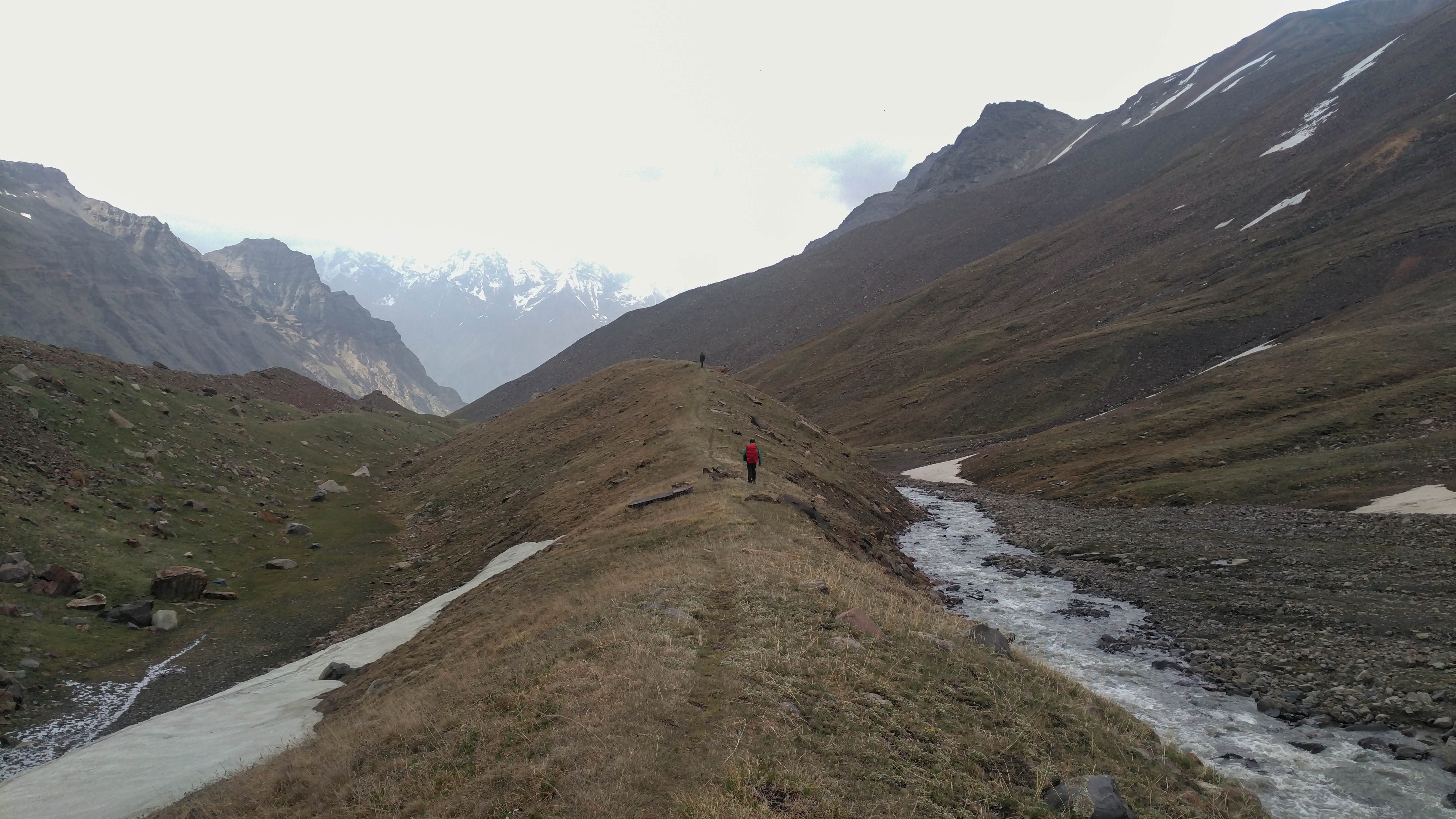
P.C: Arpan Sarkar
We reached our campsite of Bonga at about 5pm. A chilled river needed to be crossed barefoot before we reached. The camps were already fixed as the support staffs were well ahead of us. The weather was still very cloudy. We had crossed the Borasu Pass successfully but it was a quite cumbersome day till we saw the dead body.
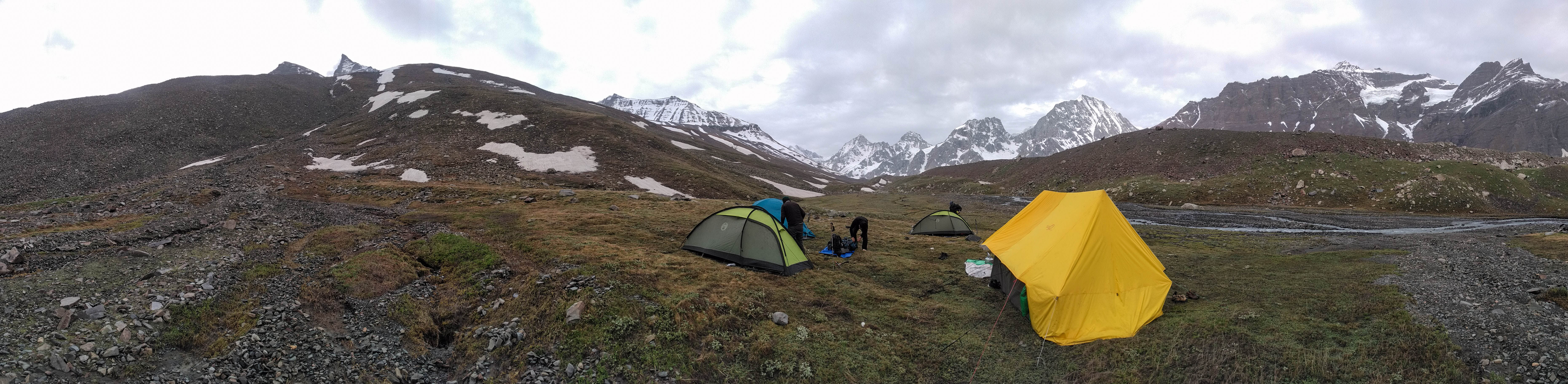
The dinner was getting cooked and meanwhile we finished our dry fruits of stock. Some trek stories and some good food got us back in our normal self. It was the longest day in the whole trek. We slept early after the dinner.
16th June, 2018 (Bonga to Chitkul, 3450 mt; 24 km trek)
The river we camped beside was connected to Baspa 6-7 kilometers before Chitkul. This place is called Rani Kanda. Altitude is 3700 meters. Snow patches were all around us. The morning was sunny. There were a tension in some of our mind that if the news of Harshad Apte’s death had been published already, it would be a tough time going on for our families. The information of today’s trek we had was a little confusing. There is a motorable road within 12 kilometers, which connects the Tibetian border to Chitkul. So, we started our trek a little late in relaxed mood at about 10am. Everyone had a dream of refreshing shower and a warm blanket in their mind. But we ended up walking 25 kilometers in the end. Rahul Bhai booked a decent dormitory in Chitkul before starting off the trek. But inbetween it got canceled because of some unknown reasons and we didn’t have any idea as we were far away from mobile network.
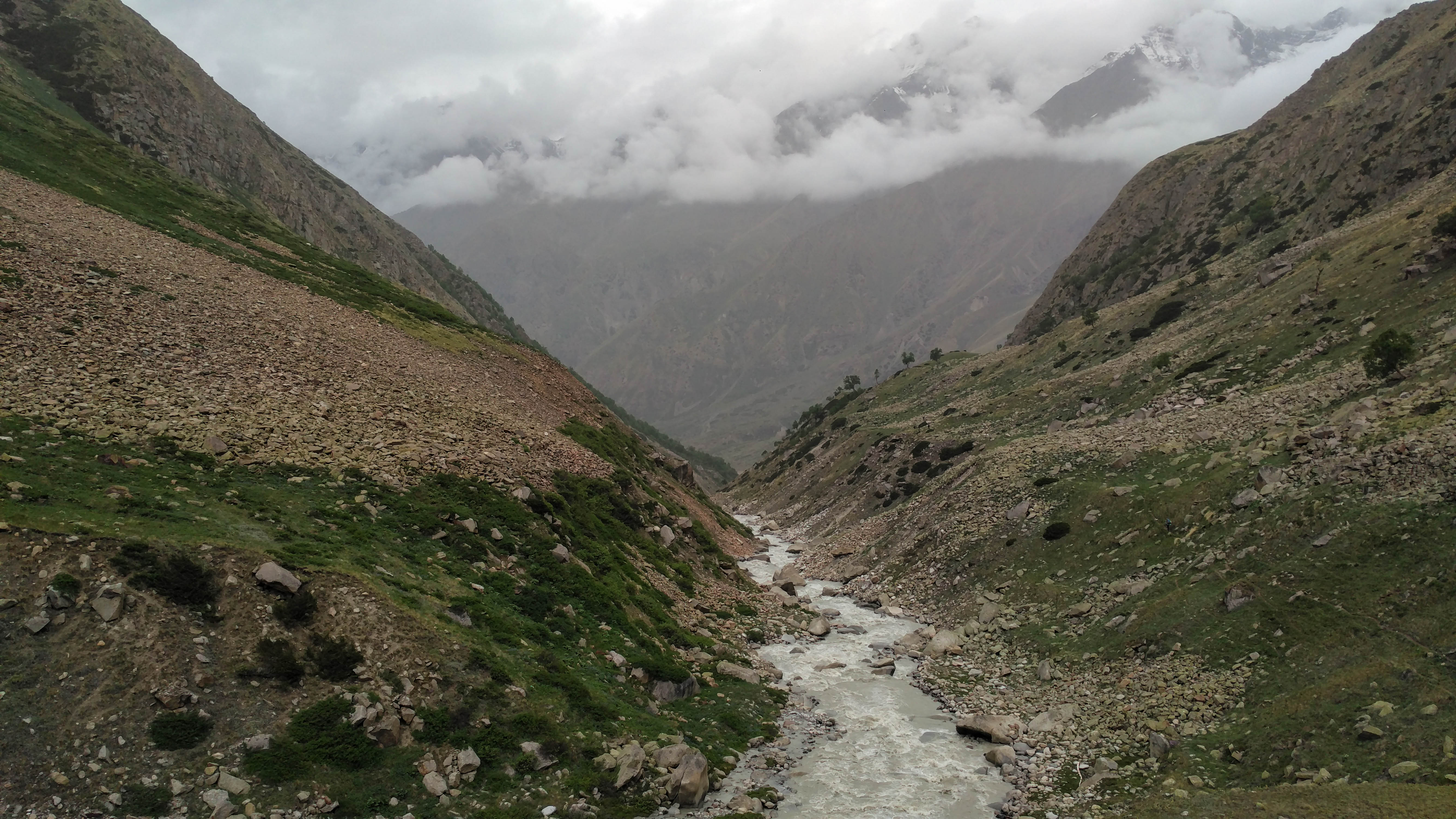
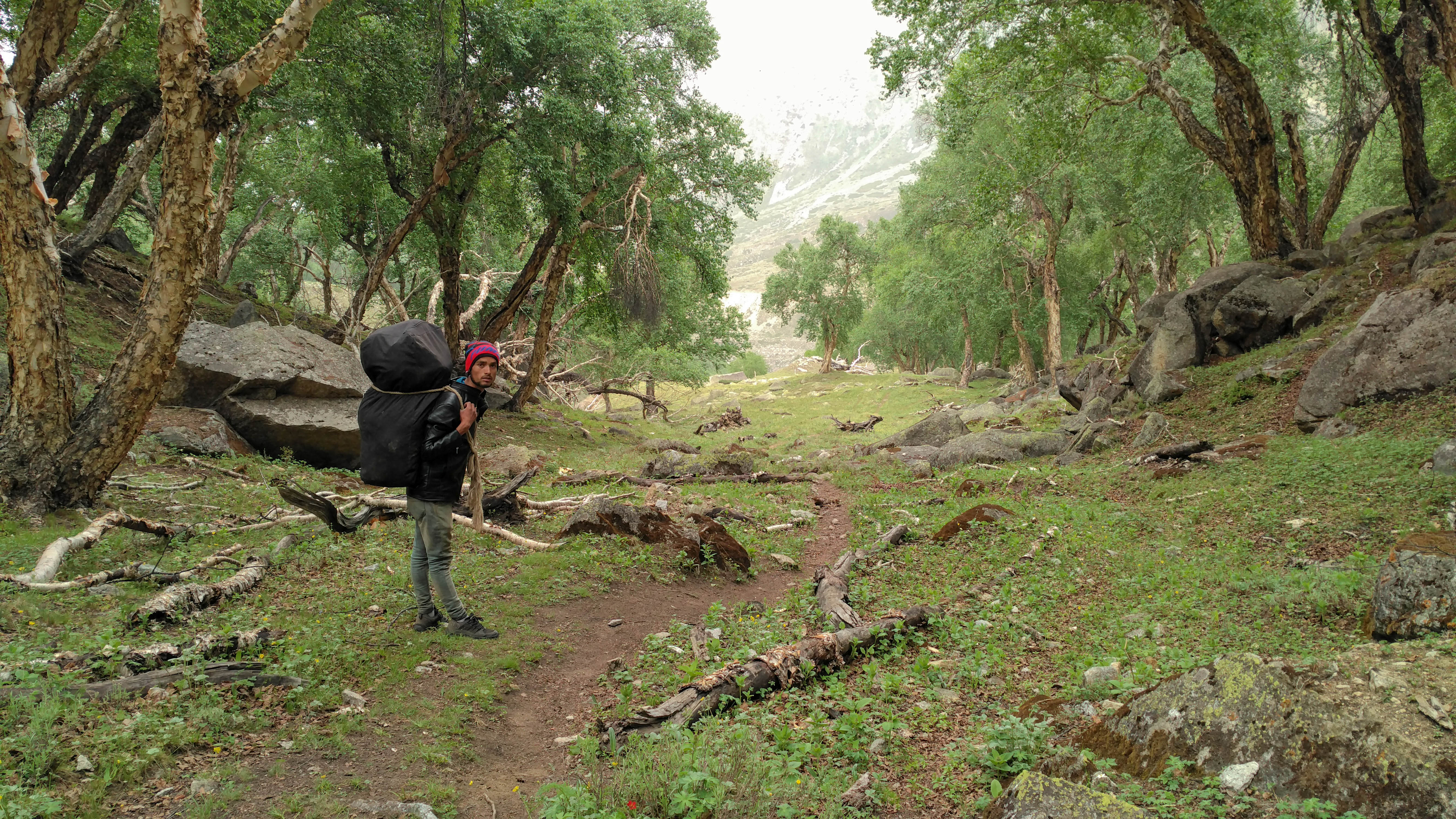
The first 12 kilometers of trek was beautiful. The bugyals we were crossing were heavenly. It was birch trees and meadows all over. Sayan, with his injured leg, was walking on a good pace. Harsha borrowed slippers from a support staff and was literally running. The gradient was not much that day.
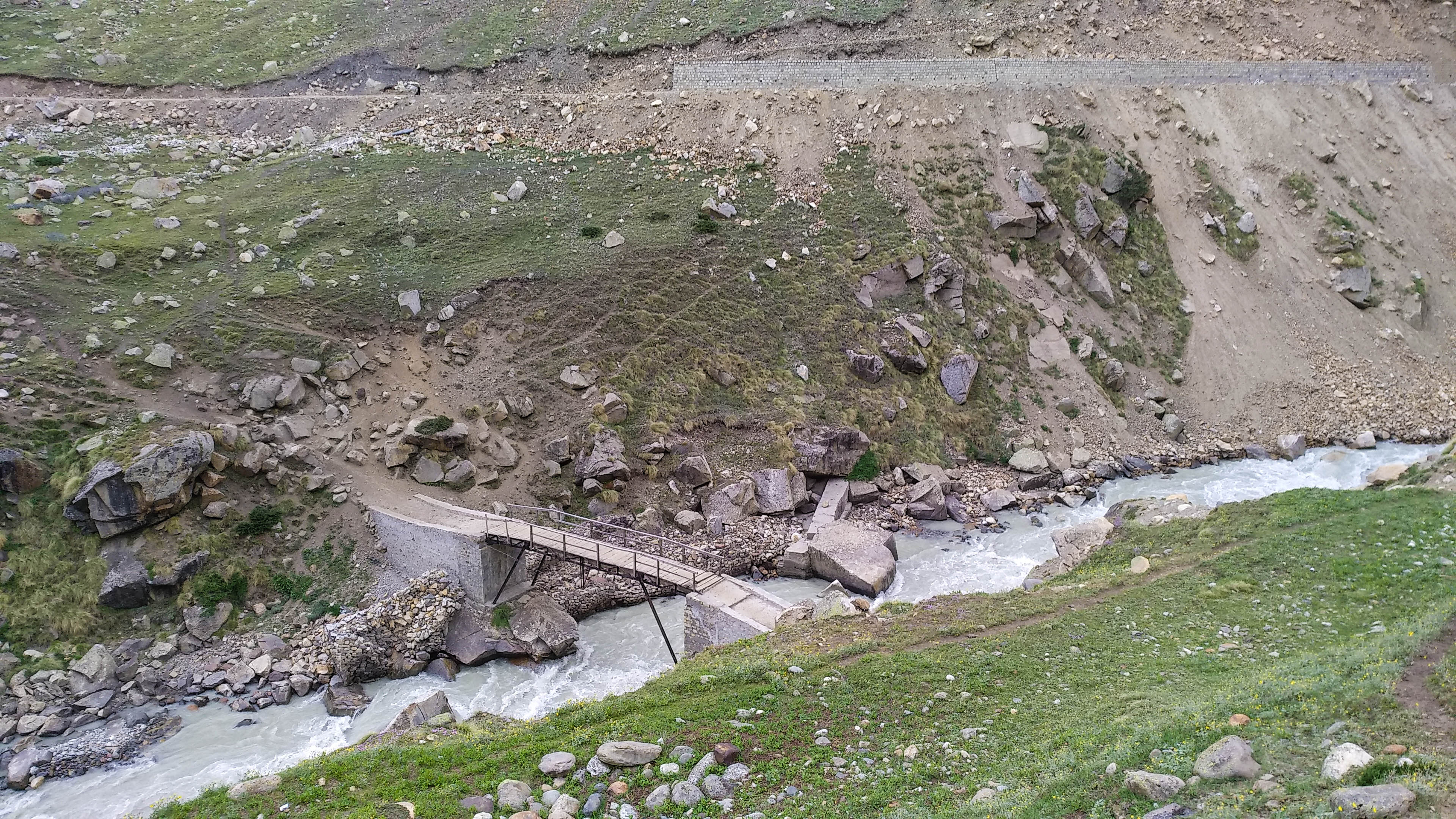
We saw the road from the valley on the other side of Baspa and realised that there was no way of crossing the river without a bridge. So, we had to walk on the opposite direction of Chitkul for roughly 2 kilometers to reach a small concrete bridge. We waited there for some time with a hope that some vehicle would give us a ride upto Chitkul. But it did not happen. We walked roughly 10 kilometers from there to reach Chitkul. The dog accompanied us from Saunibhera camp, found some good company and was set there.
The ITBP checkpost stands 3 kilometers before Chitkul. Doc and Navtej Ji talked to the defense officials there and the issue was solved. It was easy enough to make the personnel on the post understand our difficulty even after a death couple of days back. They noted down our personal information and let us pass the check-post.
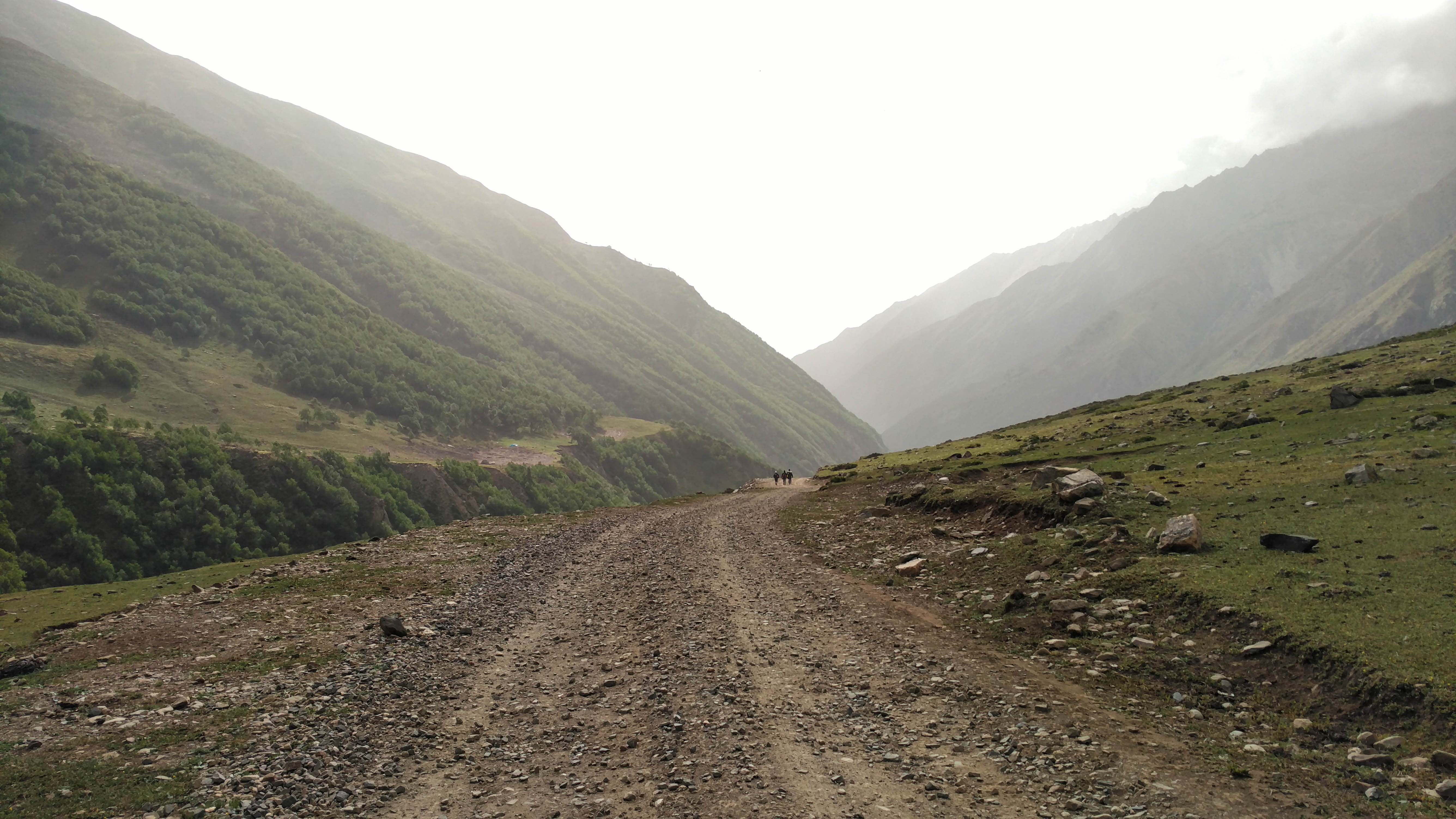
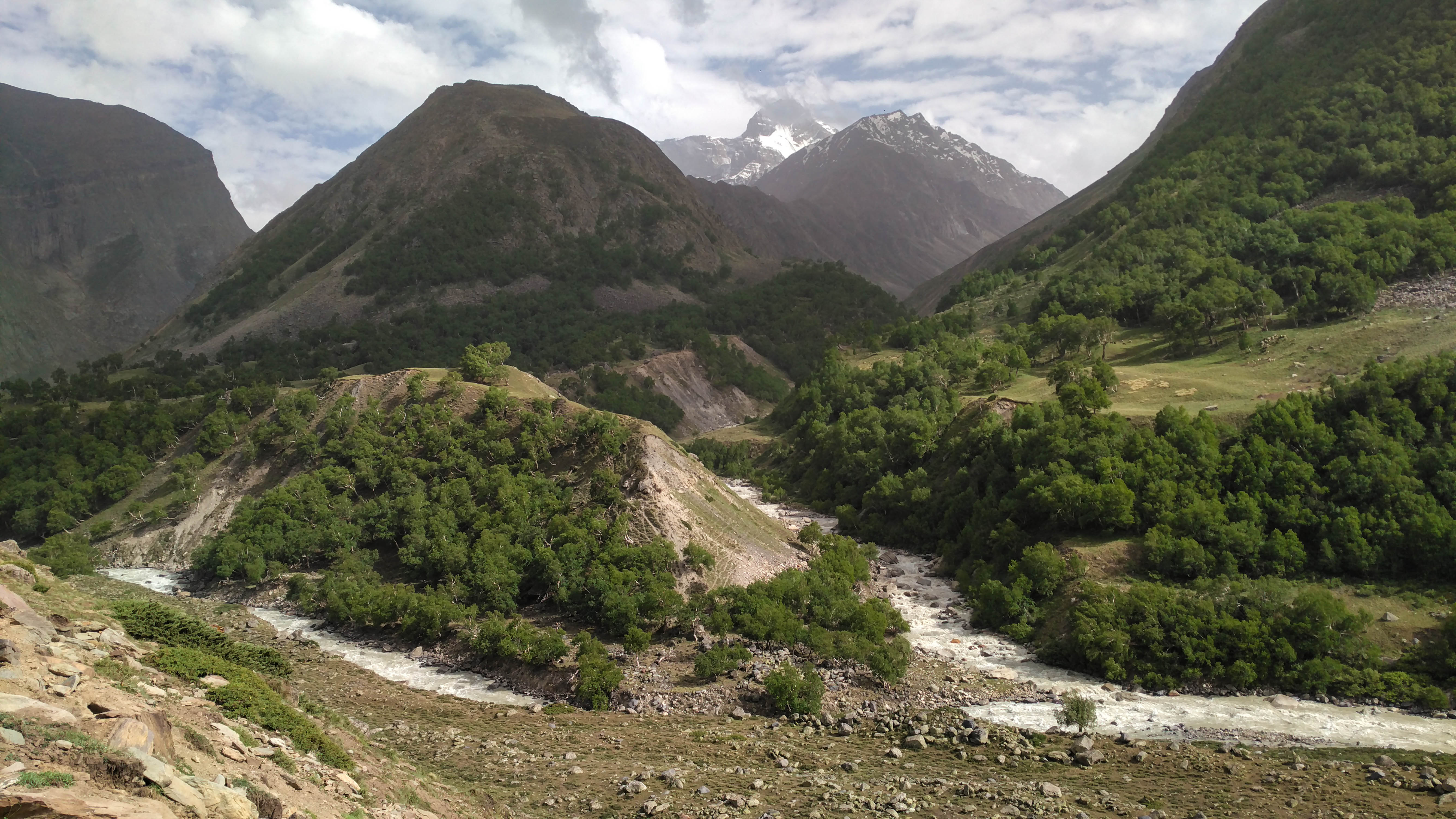
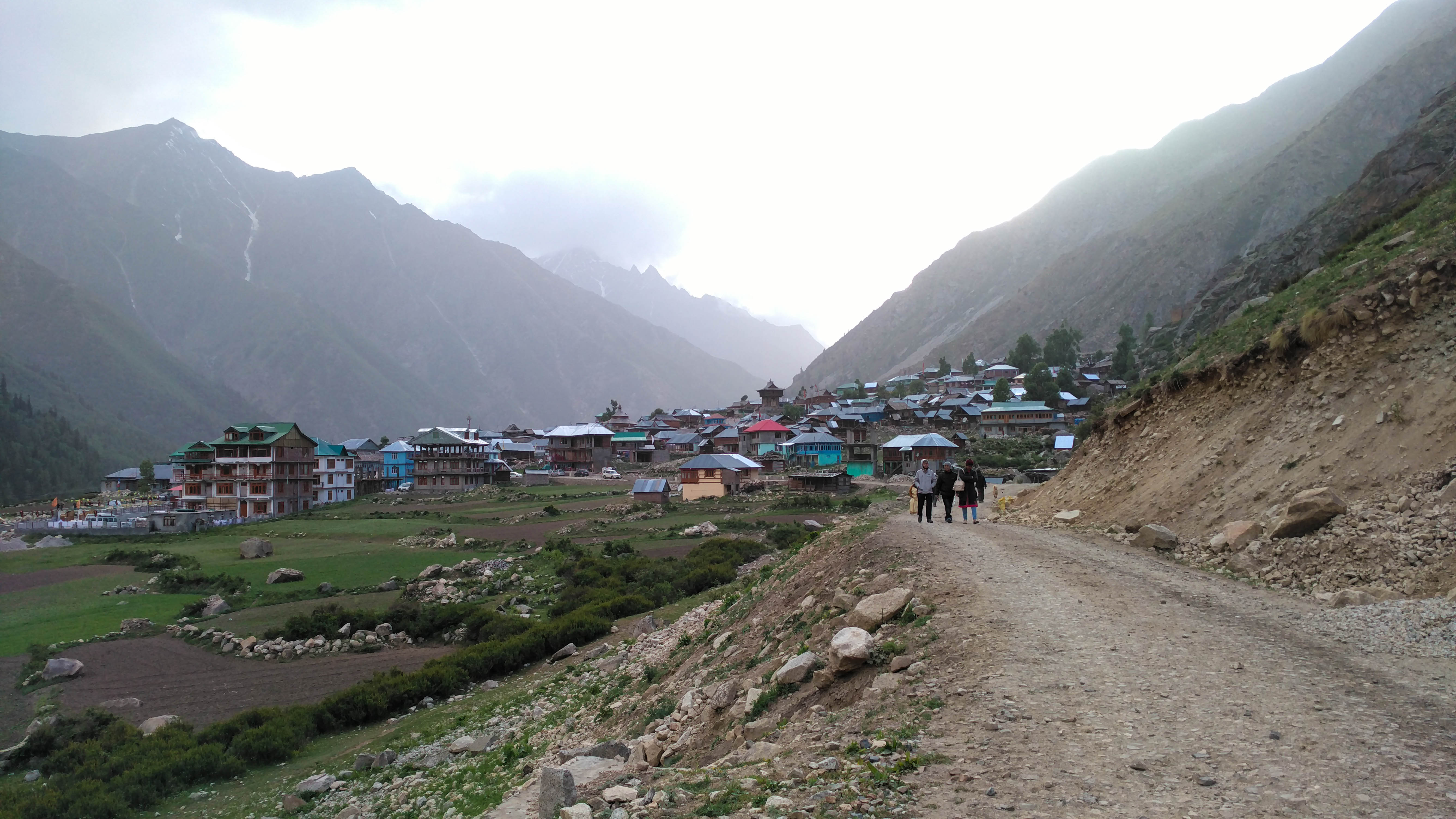
Chitkul used to be a very beautiful last Indian village on its route. I have heard many stories of Chitkul from many people who have left eying beautiful natural surroundings of here. But these days hotel construction and commercialization are the demons every hill station are facing. More of, after being in the wild for a week Chitkul was no fun. Our guide Jaychand, organizer Birendra and the support stuffs separated from here. We fortunately found a small room against Rs 500/- where, though all of us fit but it was with some struggle. Rotis and chicken curry saved seven hungry souls that night.
The experience of Borasu is a shiny highlight of my life so far. I guess this will last really long. The group never let me realize that it was almost my first great Himalayan trek. All of the four mates, with whom I have never met 10 days back, are now great friends. Navtej Ji is in his late 50’s and me, Raktim and Sayan are in our early 30’s. But the age difference was not a concern. That is how the Great Himalayan air and wilderness effect on us.
On 17th morning we boarded a early morning bus from Chitkul to Sangla. From Sangla we booked a cab that took us on a long drive to Chandigarh, through the beautiful roads of Himachal Pradesh and the super crowded Simla. The traffic jams inbetween were killing us. It was so so frustrating to have such long traffic jams after a long 100 kilometers marvelous trek. It was a long weekend because of Eid. So, Shimla was already overcrowded. We reached Chandigarh at 11 pm. I separated from there and took a ride to Delhi that night. The rest of the team stayed in a guest house in Chandigarh.
On 18th June morning when I was sitting on that Delhi to Hyderabad flight, so many thoughts were clouding my mind. The most prominent of them was the glimpses of standing on the Borasu Pass, and that is what it should be like. We had everything that a successful trek can have. For me Borasu was a very challenging trek. The experienced boys like Navtej, Rahul, Sayan and Harsha was also on the same page with me and that gave me huge confidence. After I returned home, it was 4 and half kilogram less.
Rahul Bhai rightly mentioned the definition of Borasu; “jo pass karne mein bade bado ki ansu nikal jaye” (the pass which make the big guns end up crying) …. HaHa…Hilarious!!!
 Arpan's Blog
Mind-blowing! What a complete description of this route! Hope, the future trekkers will get all the necessary information from this writing. Happy trekking.
LikeLiked by 1 person
Thank you very much sir. Borasu is not a very popular trek route, hope this will help the interested ones.
LikeLike
Planning to do the trek in the first week of july. Is it a right time ?
LikeLiked by 1 person
The best time to do this trek is early May to mid June and early October to mid November. As this area get a lots of rain, avoid this trek in rainy season.
LikeLike
Your trekking was amazing .
Writing was so very much nice .
And was detailed and even was very much informative , useful as well as interesting .
LikeLiked by 1 person
Thank you for your appreciation
LikeLike